Fire-stimulated flowering

May 25th, 2013 No comments

Some plant species flower profusely and quickly after fire (fire-stimulated flowering). Compared with resprouting or postfire seeding, this trait is relatively unknown outside of South Africa and Australia [1, 2]. It is considered one of the adaptations of some resprouting species to live in recurrently burn environments. There are some of these species that rarely flower without a fire (obligate postfire flowering) while others can flower in the absence of fire but they produce more flowers after it (facultative postfire flowering). One example I had the chance to observe recently in Central America is Bulbostylis paradoxa (Cyperaceae; Figure below); it is a very flammable plant that grow in savannas and dry forest of Central/South America and the Caribbean. Local foresters told me that they have never seen this species flowering in absence of fire, and that they start flowering next day after the fire.


Figure: Bulbostylis paradoxa (Cyperaceae) one month after a fire in Santa Rosa National Park, Costa Rica (fotos: J.G. Pausas, May 2013).

References:
[1] Bytebier B., Antonelli A., Bellstedt D.U., Linder H. P. 2011. Estimating the age of fire in the Cape flora of South Africa from an orchid phylogeny. Proc. R. Soc. B, 278: 188-195.

[2] Lamont B.B., Downes K.S. 2011. Fire-stimulated flowering among resprouters and geophytes in Australia and South Africa. Plant Ecol. 212: 2111-2125.


Fire shapes savanna-forest mosaics in the Brazilian cerrado

May 14th, 2013 No comments

Cerrado is the name of a tropical fire-prone mosaic of savanna and forest in Brazil. In a recent paper [1], we showed that in cerrado landscapes, despite the existence of a great variety of community structure (from open savannas to closed forests; Figure below), there are two well-defined stable states of community function, each associated with contrasting levels of community closure (open and closed environments) and maintained by different fire regimes. Soil properties, phylogenetic and non-phylogenetic beta-diversities, and most of the plant functional traits presented a threshold pattern along the community closure gradient with coinciding breakpoints, providing strong evidence of a functional threshold along the forest-savanna gradient. Open environments consisted of communities growing on poor soil and dominated by short species with early investments in thick barks, low wood density and with thick and tough leaves (high toughness and low specific area). In contrast, closed communities grow in more fertile soils and include plants having the opposite functional attributes. Moreover, we found contrasting fire regimes on the two sides of the threshold, with open formations showing shorter fire intervals than closed formations and a switch from communities dominated by fire-resistant plants to communities dominated by shade tolerant species that compensate for their lack of fire resistance by efficiently closing the canopy (i.e., reducing flammability). Overall, these results are consistent with the theoretical model of fire-plant feedbacks as main drivers of the coexistence of two stable states, savanna and forest. In this context, we provide the first field-based evidence for a community-level threshold separating two vegetation states with distinct functional and phylogenetic characteristics and associated with different fire regimes.

Top: A woodland cerrado (cerrado sensu stricto) six months after a fire, with several top-killed trees and a developed layer of resprouting vegetation; and one of the sampled closed forests.
Middle: A dense woodland cerrado (cerrado denso); one example of a typical thick-barked species found in open communities (Anadenanthera peregrina (Benth.) Reis, Fabaceae); a transitional zone between dense savannas and forests.
Bottom: A typical open savanna at the early rainy season, with tall flammable grasses and small trees and shrubs.
Photo credits: V. Dantas, G. Sartori, V. Cadry, J.G. Pausas, F. Noronha, A. Favari. See [1].

References

[1] Dantas V., Batalha, MA & Pausas JG. 2013. Fire drives functional thresholds on the savanna-forest transition Ecology 94: 2454-2463. [doi | pdf]


Art: fire by Chema Madoz

March 19th, 2013 No comments

I have recently visited a very nice and impressive exhibition of photographs by Chema Madoz; his photographs are visual poems. Here one that deals with fire.

A new global fire map

March 6th, 2013 2 comments

We have used remotely sensed fire information for the whole globe and aggregated this information by the WWF ecoregions, to produce an ecologically-based global fire map (figure below [1]). Using this map we have tested the intermediate fire-productivity model [2,3], i.e. that fire activity changes along the productivity/aridity gradient following a humped relationship. The results suggest that fires occur in all biomes and in nearly all world ecoregions. Fire activity peaked in tropical grasslands and savannas, and significantly decreased towards the extremes of the productivity gradient. Both the sensitivity of fire to high temperatures and the above-ground biomass increased monotonically with productivity. In other words, fire activity in low-productivity ecosystems is not driven by warm periods and is limited by low biomass; in contrast, in high-productivity ecosystems fire is more sensitive to high temperatures, and in these ecosystems, the available biomass for fires is high. The results support the intermediate fire–productivity model on a global scale and suggest that climatic warming may affect fire activity differently depending on the productivity of the region. Fire regimes in productive regions are more vulnerable to warming (drought-driven fire regime changes), while in low-productivity regions fire activity is more vulnerable to fuel changes (fuel-driven fire regime changes [4]).

Figure: An ecologically-based global fire map, from Pausas & Ribeiro (2013) [1]. The shape file is available under request [email here].

References
[1] Pausas J.G. & Ribeiro E. 2013. The global fire-productivity relationship. Global Ecol. & Biogeogr. 22: 728-736 [doi | pdf | erratum] – UPDATE: Paper featured by NASA.

[2] Pausas J.G. & Paula S. 2012. Fuel shapes the fire-climate relationship: evidence from Mediterranean ecosystems. Global Ecol. & Biogeogr. 21: 1074-1082. [doi | pdf | supp]

[3] Pausas J.G. & Bradstock R.A. 2007. Fire persistence traits of plants along a productivity and disturbance gradient in Mediterranean shrublands of SE Australia. Global Ecol. & Biogeogr. 330-340. [pdf | doi]

[4] Pausas J.G. & Fernández-Muñoz S. 2012. Fire regime changes in the Western Mediterranean Basin: from fuel-limited to drought-driven fire regime. Climatic Change 110: 215-226.  [doi |  pdf]


La ‘ciencia básica’ es básica

February 13th, 2013 No comments

Texto original en:  No hay ciencia aplicada sin ciencia básica, J.G. Pausas, El País, 13 Febrero 2013   [versión en PDF]

Una de las diferencias entre los humanos y el resto de los seres vivos es la elevada conciencia que tenemos de nosotros mismos y de nuestro entorno. Los humanos hemos sido capaces de enmarcar espacial y temporalmente nuestra existencia en el universo, y eso ha sido gracias a los avances en el conocimiento que hemos ido adquiriendo a lo largo de nuestra historia (el saber). A ese avanzar en el conocimiento es a lo que llamamos ciencia. La Real Academia Española define ciencia, de manera muy similar a como ya lo hacía Aristóteles, como “el conjunto de conocimientos obtenidos mediante la observación y el razonamiento, sistemáticamente estructurados y de los que se deducen principios y leyes generales”. La ciencia es la base desde la cual la humanidad progresa, el avance del conocimiento en un sentido amplio, general y sin límites. A la ciencia a menudo la llamamos ciencia básica o ciencia fundamental no orientada, en contraste con la ciencia aplicada.

La ciencia aplicada es un producto de la ciencia y se refiere a la aplicación del conocimiento científico básico a necesidades humanas y al desarrollo tecnológico. La ciencia aplicada bebe de la ciencia básica, y no aspira a generar conocimiento para el desarrollo de la humanidad, sino a aplicar los principios de la ciencia para el desarrollo de nuevos productos, métodos o tecnologías concretas (medicamentos, herramientas, máquinas, estrategias, etcétera). La ciencia aplicada es necesaria en nuestras sociedades pero nunca puede sustituir ni dirigir los objetivos de la ciencia básica, que tiene una visión más profunda, ilimitada y a largo plazo. Actualmente la ciencia se realiza principalmente por científicos especializados en materias concretas, y se difunde a la sociedad mediante las universidades, los medios de comunicación, los museos o los textos de divulgación científica. Por su carácter general, por su dificultad y ambición en sus objetivos, y por su gran valor (conocimiento), la ciencia básica se desarrolla principalmente en organismos públicos (CSIC, Universidades) de manera que procura ser independiente de las dinámicas sociales y económicas. La ciencia aplicada, que tiene una visión a más corto plazo (incluyendo la posibilidad de obtener rédito económico casi inmediato), se realiza tanto en organismos públicos como en privados.

Un país que limite la ciencia básica difícilmente podrá aplicar la ciencia para el desarrollo tecnológico; a lo sumo podrá copiar tecnologías de otros países, y por supuesto, no contribuirá al desarrollo humano. En palabras de B. Houssay, Premio Nobel de Medicina, “no hay ciencia aplicada sin ciencia que aplicar”. La inversión en ciencia básica es inversión en conocimiento que repercute en toda la sociedad, contribuye al progreso de la humanidad y posibilita la realización de ciencia aplicada. Todo ello justifica ese lema tan de moda actualmente: Sin ciencia no hay futuro. Es más, sin ciencia tampoco hay pasado, ya que la ciencia nos permite conocer el origen y evolución de la materia, de la vida y de las culturas.

Dada la importancia de la ciencia, sorprende que el actual Gobierno de España arrinconase la ciencia en la estructura del Estado, de tal manera que ya no hay un ministerio que tenga como objetivo principal el potenciarla. Pero más sorprendentes han sido los grandes recortes en investigación que se están realizando actualmente y la situación precaria de los puestos y ayudas a la investigación. Se hace difícil explicar que los recortes en I+D sean, por ejemplo, mucho mayores que los recortes en armamento y defensa. También llaman la atención las nuevas formas de selección de los jóvenes investigadores candidatos a contratos para realizar una actividad científica en España (programas Juan de la Cierva y Ramón y Cajal); el actual sistema, aparte de añadir algunas trabas administrativas, permite que la selección final de ese personal se realice por no científicos y considere méritos no científicos, comprometiendo la consolidación del talento actualmente acumulado por nuestros jóvenes investigadores.

De la misma manera cuesta entender el nuevo Plan Estatal de Investigación, Desarrollo e Innovación (I+D+i), que no menciona la investigación básica, propone un trasvase potencialmente grande de dinero público al sector privado y no resuelve aspectos clave de la carrera investigadora (ver Un plan sin plan, F. Valladares, El País, 8/1/2013). Los recortes en conocimiento no parecen limitarse al ámbito de los investigadores. La nueva ley educativa en trámite (LOMCE) reduce las enseñanzas del conocimiento básico en el bachillerato y permite que se llegue a la universidad sin haber cursado ninguna asignatura que tenga contenido científico. Es más, permite que los interesados en realizar carreras de ciencias puedan llegar a la Universidad sin haber cursado asignaturas relacionadas con las ciencias naturales.

La mayoría de estos cambios no se justifican por la crisis y se han realizado a espaldas de la comunidad científica (y del resto de ciudadanos). Además, inevitablemente, estos cambios van a reducir el potencial de nuestro país y la capacidad de salir de la crisis, desperdiciando los recursos invertidos en ciencia durante los últimos años (como ejemplo, la llamada fuga de cerebros). Realmente parece que el Gobierno no entienda que la ciencia básica es básica para el desarrollo de la sociedad y haya decidido que nuestro país no debe contribuir a la generación de conocimiento y desarrollo humano. Un despropósito.

Juli G. Pausas es investigador del CSIC en el Centro de Investigaciones sobre Desertificación

[Texto original en: No hay ciencia aplicada sin ciencia básica,  J.G. Pausas, El País, 13 Feb. 2013]

Textos relacioandos:

Ciencia básica en España, 6 Nov 2009 [texto]

Mediterranean diversification and plant syndromes

January 21st, 2013 No comments

Woody plants of the Mediterranean Basin can be classified in two contrasted morpho-functional syndromes [1]: a) plants with sclerophyllous, evergreen leaves and small, unisexual greenish or brownish flowers with a reduced perianth, and large seeds dispersed by vertebrates; and b) plants with alternative character states (non-sclerophyllous deciduous, semi-deciduous or summer deciduous species with large and conspicuous flowers pollinated by insects, and small seeds). The sclerophyllous syndrorme (a) occurs in clades whose characteristics pre-date the appearance of the mediterranean climate while the non-sclerophyllous syndrome (b) arose in clades that have evolved after the emergence of this distinctive climate (Tertiary – Quaternary transition).

A recent phylogenetic study [2] show that during the time with prevalent mediterranean climate, lineages with the non-sclefophyllous syndrome showed a higher speciation rate than the sclerophyllous lineages, suggesting that a syndrome-driven local diversification has occurred in shrublands under mediterranean conditions. The processes behind this result might be divers, but fire might had an important role. The rise of mediterranean climate increased fire activity [3] and traits defining these two syndromes are related to post-fire regeneration traits and to the age to maturity [4,5]. The non-sclerophyllous syndrome is associated with species considered post-fire seeders (i.e., killed by fire in which populations regenerate from a persistent seed bank; fire-stimulated germination [6,7]) and to species with early maturation. In fire-prone ecosystems, these characteristics reduce the generation time and the overlap between generations and thus they provide more opportunities for diversification.

Overall, the results provide an example of how the integration of the environmental filter in a dated phylogeny may recreate the local history of lineages and help to explain assembly processes in mediterranean ecosystems.

Figure: Frequency distribution of differences in local speciation rate (λ) between non-sclerophyllous (n) and sclerophyllous (s) syndromes in the Valencia woody flora for 3 different post cut temporal slices (cutoff of 10, 6, and 3.6 My) related to the increasing aridity associated with the rise of mediterranean climate. For all alternative phylogenies (i.e., accounting for the undertainity in node age), speciation rate of the non-sclerophyllous syndrome is greater than for the sclerophyllous one. See Verdú & Pausas (2013) for details [2].

References
[1] Herrera, CM. 1992. Historical effects and sorting processes as explanations for contemporary ecological patterns: character syndromes in Mediterranean woody plants. Am. Nat. 140:421-446.

[2] Verdú M. & Pausas J.G. 2013. Syndrome-driven diversification in a Mediterranean ecosystem. Evolution. [doi | pdf]

[3] Keeley JE., Bond WJ., Bradstock RA., Pausas JG. & Rundel PW. 2012. Fire in Mediterranean Ecosystems: Ecology, Evolution and Management. Cambridge University Press [the book]

[4] Pausas, J.G., Bradstock, R.A., Keith, D.A., Keeley, J.E. & GCTE Fire Network. 2004. Plant functional traits in relation to fire in crown-fire ecosystems. Ecology 85: 1085-1100. [pdf | jstor]

[5] Pausas J.G. & Verdú M. 2005. Plant persistence traits in fire-prone ecosystems of the Mediterranean Basin: A phylogenetic approach. Oikos 109: 196-202. [doi| pdf]

[6] Moreira B., Tormo J., Estrelles E., Pausas J.G. 2010. Disentangling the role of heat and smoke as germination cues in Mediterranean Basin flora. Annals of Botany 105: 627-635. [doi| pdf]

[7] Moreira B. & Pausas J.G. 2012. Tanned or burned: The role of fire in shaping physical seed dormancy. PLoS ONE 7(12): e51523.  [doi | plos | pdf]


Almond blossom

January 13th, 2013 No comments

The winter is being quite mild untill now in eastern Iberia and almond trees are already in flower!


Almond trees (Prunus dulcis) and bumblebee (Bombus), in Calderona, Valencia, Spain, 13 Jan 2013.
“Si per la Candelaria flora, l’hivern està fora, si no flora, ni dins ni fora”
(La Candelaria és el 2 de Febrer)

Seed dormancy as a fire adaptation in Mediterranean ecosystems

December 6th, 2012 1 comment

Plant species with physical seed dormancy are common in mediterranean fire-prone ecosystems. Because fire breaks seed dormancy and enhances the recruitment of many species, this trait might be considered adaptive in fire-prone environments [1]. However, to what extent the temperature thresholds that break physical seed dormancy have been shaped by fire (i.e., for post-fire recruitment) or by summer temperatures in the bare soil (i.e., for recruitment in fire-independent gaps) remains unknown [1]. In a recent paper published in PLoS ONE [2], we tested these two alternatives in six woody species (21 populations) occurring in fire-prone areas across the Mediterranean Basin (Spain and Turkey). Seeds from different populations of each species were subject to heat treatments simulating fire (i.e., a single high temperature peak of 100ºC, 120ºC or 150ºC for 5 minutes) and heat treatments simulating summer (i.e., temperature fluctuations; 30 daily cycles of 3 hours at 31ºC, 4 hours at 43ºC, 3 hours at 33ºC and 14 hours at 18ºC).

The results showed that fire treatments broke dormancy and stimulated germination in all populations of all species. In contrast, summer treatments had no effect over the seed dormancy for most species and only enhanced the germination in Ulex parviflorus, although less than the fire treatments. That is, the results suggest that in Mediterranean species with physical dormancy, the temperature thresholds necessary to trigger seed germination are better explained as a response to fire than as a response to summer temperatures (see Figure below). The high level of dormancy release by the heat produced by fire might enforce most recruitment to be capitalized into a single post-fire pulse when the most favorable conditions occur. This supports the important role of fire in shaping seed traits [3]. Given that seed dormancy is heritable, demonstrating that it provides higher chances of recruitment (i.e., higher potential fitness benefits) in response to fire than in response to summer temperatures suggests the temperature threshold for breaking dormancy might be an adaptation to fire [1, 4].

Figure: Germination (%) in fire conditions (y axis) versus germination (%) in summer conditions (x axis) for 6 species (21 populations across the Mediterranean basin). Intraspecific variability (i.e., among populations) is indicated by small symbols (mean population value) emerging from the large symbol (mean species value). The 1:1 line is also shown (dotted line). Species considered are: Cistus albidus, Cistus creticus, Cistus parviflorus, Cistus salviifolius, Fumana thymifolia, and Ulex parviflorus.

References:
[1] Keeley, J. E., J. G. Pausas, P. W. Rundel, W. J. Bond, and R. A. Bradstock. 2011. Fire as an evolutionary pressure shaping plant traits. Trends in Plant Sci. 16:406-411. [doi | pdf]

[2] Moreira, B. and J. G. Pausas. in press. Tanned or burned: The role of fire in shaping physical seed dormancy. PLoS ONE 7(6): e39810. [doi | pdf]

[3] Moreira B., Tavsanoglu Ç., Pausas J.G. 2012. Local versus regional intraspecific variability in regeneration traits. Oecologia 168: 671-677. [doi | pdf]

[4] Pausas J.G. & Schwilk D.W. 2012. Fire and plant evolution. New Phytol., 193, 301-303. [doi | wiley | pdf]

Fuego, ecología y bomberos

November 12th, 2012 1 comment

Recientemente me invitaron a presentar el libro sobre “Incendios Forestales: una visión desde la ecología” a las jornadas SINIF (Simposio Nacional sobre Incendios Forestales), unas jornadas orientadas a la gente que trabaja en prevención y extinción de incendios forestales. Para mi esa invitación fue una sorpresa, ya que escribí el libro pensando en estudiantes y profesionales de la biología y ecología, y nunca pensé en el gremio de los bomberos mientras lo escribía. Durante estas jornadas me di cuenta que mi objetivo en el libro era acerar el fuego a los biólogos (el papel del fuego en la naturaleza), pero parece que también esta funcionando para acercar la biología y los procesos ecológicos a los expertos en gestión de fuegos.

Con la adquisición del libro a través de www.sinif.es [publicaciones] estarás contribuyendo a la continuidad de la labor científica y divulgativa del SINIF. [hoja de pedido, o enviando un mensaje a info@sinif.es]. Más información y puntos de venta en: www.uv.es/jgpausas/incendios


Otro paso atrás para la ciencia española

November 1st, 2012 No comments

Es indudable que en las últimas décadas España ha ido modernizándose y abriéndose al mundo. Sin embargo en los últimos meses hay una clara tendencia a lo contrario en muchos ámbitos. Un ejemplo de ello, aunque no el más grave, es la decisión de la Agencia Española de Meteorología (AEMET) de cerrar el acceso libre a los datos que hasta ahora estaban disponibles a través de un servidor de FTP [ver noticia]. Este servidor permitía el acceso público y sin trabas administrativas ni económicas a datos de temperatura, precipitación, contaminación, radiación, rayos, etc… para toda España, y lo utilizaban miles de personas. Según la misma AEMET, hablando del éxito de su página web, decía (el 31/10/2011): “Al éxito del web ha contribuido la nueva política de datos que puso en marcha AEMET hace casi un año, basada en el acceso libre y gratuito por vía electrónica a sus datos meteorológicos que ha registrado un aumento del 400% en las visitas diarias a las páginas de “observación-datos”, hasta alcanzar las 300.000, mientras que el nuevo servidor FTP ha llegado a las 190.000 descargas diarias.“. Por ejemplo, muchos investigadores (el que escribe incluido) utilizábamos esos datos de fácil y rápido acceso de manera exploratoria para entender mejor aspectos relacionados con las olas de calor y los incendios ([1], Figura); otros lo utilizaban para caracterizar sus zonas y periodos de estudio (p.e., estudios de fenología [2]); otros correr modelos de simulación; etc. Los medios de comunicación, en especial aquellos que realizan periodismo de calidad, también los utilizaban para informar a la población. El éxito de esa página web y su política abierta se ve ahora truncado. Mientras que los demás países cada vez ponen más información de acceso libre, abierto y eficiente, nosotros vamos al contrario. Al final será verdad que Spain is different.

Figura: Datos de temperatura máxima diaria durante el verano de 2012 para tres observatorios valencianos (Turis, Lliria y Valencia). Datos obtenidos del servidor de la AEMET antes de que lo cerraran. Las lineas verticales indican la fecha de inicio de los grandes incendios de Cortes de Pallás y Andilla (28 y 29 de Junio) y de Chulilla (25 Septiembre), que entre los tres afectaron a más de 60.000 ha.

Nota: Existe una iniciativa para solicitar a la AEMET que de marcha atrás en su decisión de eliminar el acceso público, gratuito, anónimo y sin trabas administrativas a los datos meteorológicos, y que promueva políticas de apertura de datos para el acceso automático libre, eficiente y con licencias abiertas a la información pública que gestiona. [enlaze]

[1] Incendios forestales en Valencia, Junio 2012, jgpausas.blogs.uv.es, 4/7/2012
[2] Cork oak acorn production, jgpausas.blogs.uv.es, 20/1/2012


De incendios y cipreses (2)

October 7th, 2012 3 comments

Hace unos días escribí una entrada (post) sobre los famosos “cipreses ignífugos” de Jérica (incendio de Andilla, Valencia, Julio/2012) argumentado que no habían ardido principalmente por la discontinuidad del combustible alrededor y dentro de la plantación, ayudado por la situación topográfica (en una pequeña vaguada), que limitaría la llegada de las llamas a los cipreses (ver De incendios y cipreses). Mucha gente ha mostrado estar de acuerdo con mi interpretación, pero también han habido personas que ha argumentado que la fotografía aérea que presentaba podía ser antigua, y por lo tanto, actualmente podría haber más vegetación (combustible) alrededor y dentro de la parcela. Para apoyar mi argumento, aquí muestro algunas fotografías tomadas ayer (6 de Octubre) donde se observan los detalles que yo mencionaba. La razón principal de que no ardieran es que no les llegaron las llamas.


Figura 1. Se aprecia la separación entre la zona forestal (a la izquierda) y la plantación de cipreses, a la derecha. Los cipreses presentan parte de la copa de color marrón debido al efecto del calor del incendio, pero las llamas no llegaron a ellos (foto JG Pausas, 6/10/2012).


Figura 2. Separación entre la zona forestal (a la derecha) y la plantación de cipreses, en otro de los lados de la plantación. Se observan matorrales verdes, no afectados por el fuego, y una carrasca sólo parcialmente afectada, evidenciando que el fuego no llegó a la plantación (foto JG Pausas, 6/10/2012).


Figura 3. El romero (Rosmarinus officinales) y la aulaga (Ulex parviflorus) son dos de las especies arbustivas más inflamables de nuestro territorio. En estas fotografías se aprecian en primer plano ejemplares de romero (foto izquierda) y aulaga (foto derecha) que no se quemaron porque no les llegaron las llamas, y mucho menos les llegaron a los cipreses de detrás. La coloración marrón indica que sí que llegó el calor del incendio al romero, a la aulaga, y a los cipreses más externos de la plantación. Las fotos también muestran la separación entre los cipreses, y la poca vegetación en el sotobosque, aspectos que impiden la propagación del fuego (fotos JG Pausas, 6/10/12).

Figura 4. Ejemplo de lo que puede pasar cuando llegan las llamas a los cipreses. Incendio del Alt Empordà, Julio 2012. (foto: L. Brotons).

Más información: De incendios y cipreses (1), jgpausas.blogs.uv.es, 19 Sep. 2012.


De incendios y cipreses

September 29th, 2012 13 comments

Este verano en España circularon unas fotos de una zona incendiada (incendio de Andilla, junio/julio 2012, Valencia) donde había una grupo de cipreses que no se había afectado por el incendio (ver figura 1). Eso llevó a que muchos medios de comunicación sacaran titulares como: “Los cipreses se comportan como escudos naturales contra el fuego“, “El enigma de los cipreses ignífugos“, “¿Y si los cipreses de Jérica nos estuvieran diciendo lo que hay que hacer?“, etc… Estas noticias han llevado a que se sugiera la plantación de cipreses para la “lucha contra incendios” y la “protección de viviendas”; incluso hay organismos que ya se han comprometido a realizar plantaciones con esos fines (“La Diputación de Valencia plantará cipreses para luchar contra los incendios“, “Cipreses contra el fuego“). Estas noticias sorprenden un poco a los especialistas, ya que se sabe que los cipreses no son ignífugos, arden como todas la plantas. Se conocen otras zonas afectadas por incendios en las que había cipreses y estos ardieron (p.e., incendio de las Useres, Castellón). Además, en algunos países, como en EEUU, está prohibida su plantación en jardines situados en zonas donde los incendios son frecuentes, precisamente por el peligro que conllevan. Los setos de cipreses alrededor de casas son especialmente peligrosos. Desde el punto de vista de la biodiversidad, los cipreses no son plantas autóctonas en España, y por lo tanto, no se aconseja su plantación en medios forestales, a no ser que la razón sea de mucho peso.

Figura 1. Fotografía difundida en los medios de comunicación donde se observan los cipreses no afectados por el incendio (Andilla, julio/julio 2012). Foto extraída de “El Pais”, 12/8/2012.

El 27 de septiembre se realizó en el Jardí Botànic de Valencia un seminario sobre los cipreses de Andilla, y quedó clara la razón por la que no ardieron. Básicamente, no ardieron porque se trata de una plantación mantenida (“limpia” y podada), de manera que no tiene sotobosque, los árboles están separados entre ellos, y al ser estrechos, a pesar de ser altos, las copas no se tocan (ver figura 2). Por lo tanto, el fuego no se puede propagar dentro de la plantación. Además, la plantación está rodeada de un camino, que impide que el fuego llegue a la mayoría de los cipreses. El fuego llegó a la plantación por el suroeste (flecha roja en la figura 2), donde hay un camino ancho que hizo de cortafuegos, de manera que disminuyó mucho la intensidad del fuego a la llegada de la plantación. Por otro lado, la plantación está situada en una pequeña vaguada, hecho que dificulta aún más que llegue el fuego de manera intensa.

Figura 2. Imagen aérea de la plantación de cipreses localizada en el término de Jérica que no se afectó por el incendio originado en Andilla (Junio/Julio 2012; imagen previa al incendio descargada de www.google.maps el 28/9/2012 [ver imagen en google]). La flecha roja indica la dirección del fuego (según Raúl Quílez, del Consorcio Provincial de Bomberos de Valencia). La orientación de la fotografía difundida en la prensa (figura 1) no permite ver que se trata de una plantación sin sotobosque, con árboles distanciados y con claras discontinuidades de combustible.

Por lo tanto, no se puede decir que los los cipreses sean ignífugos, sino que la discontinuidad de combustible que había dentro y alrededor de la plantación evitó que se afectaran por el fuego; una plantación de olivos, naranjos, algarrobos, etc.  hubiera tenido el mismo efecto. Un ejemplo de una plantación de pinos que no se vio afectada por un incendio se puede ver en la figura 3. Crear discontinuidades en el combustible constituye, de hecho, una manera de limitar los incendios;  esto resulta especialmente evidente con los cultivos (figura 4), por lo tanto, no es ninguna novedad. Lo ocurrido con estos cipreses es un ejemplo de cómo los medios de comunicación pueden desorientar a la población, e incluso influir en la gestión, sin ninguna base científica o técnica.

Figura 3: Plantación de pino piñonero (Pinus pinea) que sobrevivió a un incendio en Portugal; véase el bosque del fondo quemado (Foto: J. Climent).


Figura 4: Fotografía de una isla agrícola dentro de una zona forestal afectada por el incendio de Cortes de Pallás/Dos Aguas (Valencia, Junio/julio, 2012; foto: JG Pausas).

Bibliografía

– Libro: Incendios forestales
– Incendios forestales en Valencia, Junio 2012: ¿Por qué? ¿Cómo evitarlos?
– Life 15 days after the large fires in Valencia

Actualización:

De incendios y cipreses (1), jgpausas.blogs.uv.es 29/9/2012
De incendios y cipreses (2), jgpausas.blogs.uv.es 7/10/2012
De incendios y cipreses (3), jgpausas.blogs.uv.es 22/6/2013
De incendios y cipreses (4), jgpausas.blogs.uv.es 31/8/2015
De incendios y cipreses (5), jgpausas.blogs.uv.es 11/10/2016
De incendios y cipreses (y 6), jgpausas.blogs.uv.es 3/13/2017

Fire generates intraspecific trait variability in neotropical savannas

August 28th, 2012 No comments

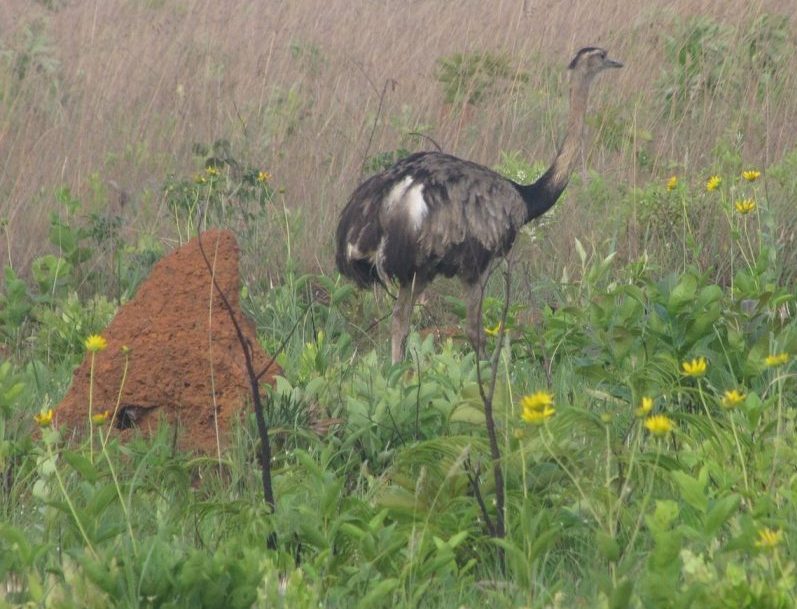
“Cerrado” are neotropical savannas from Brazil. As in most savannas, fire is very frequent in cerrado, and fires has been occurring in these ecosystems during the last few millions years. Consequently, cerrado communities are strongly filtered by fire and are composed by species capable of succeed under frequent fires (e.g., resprouters, with very thick bark, etc). A recent study [1] comparing zones with different fire regimes (annual fires, biennial fires, and protected from fires) within the cerrado (in Emas National Park) suggests that most plant trait variability is found within species (intraspecific) and little trait variability is due to changes in species composition (interspecific) between fire regimes. Thus, at community scale, fire act more as an filter, preventing some of the species from outside cerrado to colonize the cerrado (e.g., from nearby non-flammable forests), than as an internal factor structuring species composition in the already filtered cerrado communities with different fire regimes. However, fire acts as an important factor generating intraspecific variability. These results support the hypothesis of the prominent importance of intraspecific variability in strongly fire-filtered communities [2,3].

Figure: The rhea (emas in Portuguese; Rhea americana) are a flightless birds that give the name to the Emas National Park (Parque Nacional das Emas), a World Natural Heritage site located in the Brazilian Central Plateau (Photo: JG Pausas, 2009, during the field sampling [1]).

References

[1] Dantas V.L., Pausas J.G., Batalha M.A., Loiola P.P. & Cianciaruso M.V. 2013. The role of fire in structuring trait variability in Neotropical savannas. Oecologia, 171: 487-494. [doi | pdf]

[2] Moreira B., Tavsanoglu Ç. & Pausas J.G. 2012. Local versus regional intraspecific variability in regeneration traits. Oecologia, 168, 671-677. [doi | pdf | post]

[3] Pausas J.G., Alessio G., Moreira B. & Corcobado G. 2012. Fires enhance flammability in Ulex parviflorus. New Phytologist 193: 18-23. [doi | wiley | pdf]


Fire and the evolution of pine life histories

August 15th, 2012 No comments

Many pines species are fire adapted. In 1998, JE Keeley & PH Zedler provided a seminal paper showing the various fire adaptations of pines, and the relation between the different adaptations and the different fire regimes [1]. Recent phylogenetic [2,3] and conceptual [4,5] advances in fire ecology have allowed to better understand the evolutionary role of fire in plants, and specifically in pines [2-6]. In a recent paper, JE Keeley provides a new review on the ecology and evolution of pine life histories [7]. Pinus originated ~150 Ma in the mid-Mesozoic Era and radiated across the northern continent of Laurasia during the Cretaceous period, when fire activity was high [3]. Pines have followed two evolutionary strategies interpreted as responses to competition by the newly emerging angiosperms: 1) The Strobus lineage mostly has radiated into stressful sites of low nutrient soils and extremes in cold or heat; ans 2) The Pinus (subgenus) lineage has radiated into fire-prone landscapes with diverse fire regimes. Based on the life history traits associated to fire, JE Keeley define four pine syndromes [7]: fire-avoiders (no fire-adapted; with thin bark), fire-toleraters (adapted to surface fires; with thick bark and self-pruning of dead branches; tall pines), fire-embracers (adapted to crown fires; with retention of dead branches and serotinous cones), and fire-refugia (with marked metapopulation dynamics) strategies.

Figure: Basal fire scar (a) and cross-section of pine with previous fires delineated (b) demonstrating fire survival after recurrent fires. Photos by JE Keeley from [7].

References
[1] Keeley J.E. & Zedler P.H. 1998. Evolution of life histories in Pinus. In: Ecology and biogeography of Pinus (ed. Richardson DM). Cambridge University Press Cambridge (UK), pp. 219-250.

[2] Schwilk D.W. & Ackerly D.D. 2001. Flammability and serotiny as strategies: correlated evolution in pines. Oikos, 94, 326-336. [doi]

[3] He T., Pausas J.G., Belcher C.M., Schwilk D.W. & Lamont B.B. 2012. Fire-adapted traits of Pinus arose in the fiery Cretaceous. New Phytol., 194, 751-759. [doi | wiley | pdf ]

[4] Pausas, J. G. and J. E. Keeley. 2009. A burning story: The role of fire in the history of life. Bioscience 59: 593-601. [doi | jstor | pdf]

[5] Keeley, J. E., J. G. Pausas, P. W. Rundel, W. J. Bond, and R. A. Bradstock. 2011. Fire as an evolutionary pressure shaping plant traits. Trends in Plant Sci. 16:406-411.  [doi | pdf]

[6] Pausas J.G. & Schwilk D.W. 2012. Fire and plant evolution. New Phytol., 193, 301-303.  [doi | wiley | pdf]

[7] Keeley J.E. 2012. Ecology and evolution of pine life histories. Ann. For. Sci., 69, 445–453. [doi]


Linguistic diversity hotspots

August 2nd, 2012 No comments

Languages can be study using similar tools as we use for biological organism, because languages, like species, have their geographic distribution, they have variability, they evolve with time, they show divergence and extinction processes. In fact there are phylogenetic trees and networks of languages [1] similar to those we build for understanding species evolution. In addition, a recent paper show that the hotspots of species diversity also co-occur with hotspots of language diversity [2], in such a way that highly biodiverse areas accounting for 24% of Earth’s land surface contain ca. 70% of the world’s languages. However, the reasons of this link is not yet well understood. Are the factors that generate linguistic diversity the same to those that generate biodiversity? Is the linguistic diversity a consequence of the biodiveristy? Nearly 60 percent of the languages in high biodiversity regions, like Amazonia and the lowland forests of West Africa, are spoken by fewer than 10,000 people; more than 1,200 of those languages are spoken by fewer than 1,000 people. So cultural diversity, as biological diversity, is threatened. It is worth mentioning the recent online collaborative effort trying to preserve samples of endangared languages [3].


Geographic distribution of indigenous languages (from [2])

References
[1] Diversity of languages, jgpausas.blogs.uv.es, November 7th, 2010.

[2] Gorenflo L.J., Romaine S., Mittermeier R.A. & Walker-Painemilla K. (2012). Co-occurrence of linguistic and biological diversity in biodiversity hotspots and high biodiversity wilderness areas. PNAS [doi]

[3] Endangered Languages, A project by the Alliance for Linguistic Diversity, www.endangeredlanguages.com


Australian aboriginal fires preserve biodiversity

July 24th, 2012 1 comment

Traditionally, Australian aboriginal people set fires in their landscape to facilitate hunting. A recent study has compared the landscape and fire history from two regions, one where aboriginal people live in a traditional way and the other where fires are “natural” and caused by lightning [1]. The results show that aborigines generate many small fires that are climate-independent, while lightning generates few large climate-driven fires. Anthropogenic fires are smaller even when climatic conditions cause huge fire in the lightning region. The authors suggest that this climate-buffering effects of aboriginal fires has likely been important for many species that benefit both from fine-grained mosaics of alternating resources and from enhanced protection from large catastrophic fires and the predators that hunt within them. This may explain the coincident decline of many small- to medium-sized mammals in the arid regions of Australia with the cessation of aboriginal hunting and burning. That is, the extinction of the aboriginal life style shifted fire regimes from small fires to large climate-driven fires, in a similar manner to the extinction of rural life styles in the Mediterranean Europe [2], and this shift promoted the extinciton of Australian mammals.

Fire Dreaming, by Malcolm Maloney Jagamarra [from www.aboriginalartcoop.com.au]

References

[1] Bird R.B., Codding B.F., Kauhanen P.G. & Bird D.W. (2012). Aboriginal hunting buffers climate-driven fire-size variability in Australia’s spinifex grasslands. PNAS, 109, 10287-10292. [pnas]

[2] Pausas J.G. & Fernández-Muñoz S. (2012). Fire regime changes in the Western Mediterranean Basin: from fuel-limited to drought-driven fire regime. Clim. Change, 110, 215-226.  [doi | springer | pdf]


Life 15 days after the large fires in Valencia

July 22nd, 2012 4 comments

Few days ago two simultaneously large fires occurred very near to Valencia city [1]: The first affecting Dos Aguas and surroundings (ca. 29000 ha burned), and the second in Andilla and surroundings (ca. 19000 ha burned). The fires burned under extreme fire whether conditions (strong drought, high temperature and strong dry wind [Foehn type wind]). 15 days after the fire, I visited area burned around Dos Aguas and took these pictures showing the postfire life activity; several species already started to resprout and pines were dispersing their seeds. In addition I saw several lizards, different birds and a fox, all in the middle of the recently burned area, quite far from the edge of the fire.

A. Chamaerops humilis (en: Mediterranean dwarf Palm, es: palmito, cat: margalló)

B. Resprout of Quercus coccifera (en: Kermes oak, es: coscoja, cat: garric, coscoll)

C. Resprout of Daphe gnidium (en: flax-leaved daphne, es: torvisco, cat: matapoll). The high intensity of the fire is clear from the thick remaining branch.

D. Post-fire seed dispersal of the serotinous cones of Pinus halepensis (en: Aleppo Pine , es: pino carrsco; cat: pi blanc).


[1] Incendios forestales en Valencia, Junio 2012, jgpausas.blogs.uv.es, 4/Julio/2012.


Bark harvesting and Cork oak vulnerability to fire

July 11th, 2012 No comments

Cork oak (Quercus suber) is a strong fire-resistant tree species thank to is very thick and insulating corky bark [1-4]. In fact it is the only European tree with the capacity to resprout from epicormic buds in the canopy after an intense crown-fire [1]. However, the bark of the cork oak is periodically harvested for cork production (mainly for bottle tops but also for other uses, [2]) and thus bark harvesting increases the vulnerability of the tree to fire. In a recent paper we quantified the response of cork oak (tree mortality, stem mortality, and crown recovery) after fire [5]. The results showed that fire vulnerability was higher for trees with thin bark (young or recently debarked individuals) and decreased with increasing bark thickness until cork was 3–4 cm thick. This bark thickness corresponds to the moment when exploited trees are debarked again, meaning that exploited trees are vulnerable to fire during a long period. Exploited trees were also more likely to be top-killed than never-debarked trees, even for the same bark thickness. Additionally, vulnerability to fire increased with burn severity and with tree diameter, and was higher in trees burned in early summer or located in drier south-facing aspects. All these aspects need to be considered when managing cork oak woodlands specially nowadays that fire activity is increased [6]. Increasing the length of the cork harvesting cycle would increase the time during which the trees have a thicker bark and are better protected against fire injury. Since cork is the main economical income from these forests, stopping bark exploitation might be unrealistic in most cases. However, in fire-prone areas where conservation and tourism are the main objectives, stopping bark explotation would likely be the most effective option to increase ecosystem resilience to fire. The valorisation of many other services provided by cork oak forests [7] could create economic incentives to decrease the bark-exploitation dependency of these systems in the future.


Foto: Cork oak  resprouting from epicormic buds (By F. Catry)

References

[1] Pausas, J.G. 1997. Resprouting of Quercus suber in NE Spain after fire. J. Veg. Sci. 8: 703-706. [doi | pdf]

[2] Aronson, J., J. S. Pereira, and J. G. Pausas (eds). 2009. Cork Oak Woodlands on the Edge: Ecology, Adaptive Management, and Restoration. Island Press, Washington, DC. [web of the book]

[3] Pausas J.G. 2009. Convergent evolution. jgpausas.blogs.uv.es, 8/Nov/2009. [link]

[4] Pausas J.G. 2011. Bark thickness: a world record? jgpausas.blogs.uv.es, 3/Jan/201. [link]

[5] Catry F., Moreira F., Pausas J.G., Fernandes P.M., Rego F., Cardillo E. & Curt T. 2012. Cork Oak vulnerability to fire: the role of bark harvesting, tree characteristics and abiotic factors. PLoS ONE 7: e39810. [doi | pdf ]

[6] Pausas J.G. & Fernández-Muñoz S. 2012. Fire regime changes in the Western Mediterranean Basin: from fuel-limited to drought-driven fire regime. Climatic Change 110: 215-226. [doi | springer | pdf]

[7] Bugalho M.N., Caldeira M.C., Pereira J.S., Aronson J., & Pausas J.G. 2011. Mediterranean Cork oak savannas require human use to sustain biodiversity and ecosystem services. Frontiers in Ecology and the Environment 9: 278-286. [doi | pdf | blog]


Incendios forestales en Valencia, Junio 2012

July 4th, 2012 2 comments

¿Por qué se dan estos incendios?


  • El incremento de población urbana en el paisaje rural (chalets, urbanizaciones, actividades de fin de semana, etc…) aumenta la probabilidad de igniciones. Esto es debido a que muchas actividades humanas generan chispas o igniciones, tanto de manera accidental (vehículos, soldaduras, cocinas, cigarros, cableados, barbacoas, …) como intencionada (malhechores y pirómanos).
  • La disminución de la población rural (reducción del pastoreo, agricultura, recolección de leña, etc..) durante las últimas décadas conlleva un incremento de la cantidad de vegetación (combustible) en el paisaje. De manera que si se da un incendio, es más probable que sea de mayor tamaño e intensidad que anteriormente cuando el uso del monte era intenso.
  • La elevada sequía y las elevadas temperaturas hacen que la vegetación sea muy inflamable, y una fuente de ignición (chispa, etc.) pueda ser fuente de un incendio. El cambio climático aumenta la frecuencia de estas situaciones.
  • Los vientos de poniente en Valencia son muy secos, cálidos y relativamente fuertes. Si hay un incendio en estas condiciones, el fuego se propaga rápidamente y es prácticamente imposible detenerlo, hasta que no cambian las condiciones del viento.

Los días 28 al 30 de Junio de 2012 en Valencia se dieron todos estos factores. Las condiciones climáticas eran extremas, con temperaturas elevadas  (las máximas rondando 40 grados) y humedad muy baja (hacía al menos 2 meses que no llovía); en esas condiciones, las chispas prenden fácilmente. Además, hubo tres días seguidos de vientos secos y sin cambio de dirección (el poniente), que facilitó la rápida propagación del fuego. Los dos incendios que se dieron esos días afectaron aproximadamente a un total de 50000 ha. Los incendios se controlaron cuando el poniente calmó.


¿Qué podemos hacer para evitarlos?


No es fácil, y se requiere una política a largo plazo. La simple extinción no es suficiente, tal como hemos visto en muchas ocasiones, tanto en nuestro país como en otros (incluidos países tecnológicamente más avanzados y ricos). Aquí algunas ideas:

  • Disminuir la población urbana que vive en los paisajes inflamables, es decir, disminuir los chalets y urbanizaciones que tenemos en nuestros montes, reducir la interfaz urbano-forestal. En general las urbanizaciones en el medio natural son: 1) potenciales puntos de ignición; 2) puntos de desastre cuando se da un incendio (a menudo los incendios no son perjudiciales para la vegetación, que se regenera, pero causan problemas a los habitantes que viven en el monte); 3) son en sí mismos un problema para la biodiversidad, independientemente de los incendios (destrozan parte del paisaje y de la naturaleza, incrementan las especies invasoras, etc…).
  • Incentivar la vida rural y el uso sostenible de los montes. Introducir o facilitar a la presencia de herbívoros autóctonos (y sus depredadores).
  • Reducir el cambio climático, es decir, reducir las emisiones de gases efecto invernadero y cumplir con los protocolos de Kyoto sobre el cambio climático. Reducir el uso de energías contaminantes, etc.
  • Aceptar que siempre habrá incendios en nuestros montes mediterráneos, y aprender a vivir con ello. Diseñar con detalle las zonas donde se puede construir y donde no; limitar fuertemente el paso en los caminos rurales, especialmente en épocas propensas a incendios; regular las construcciones y sus alrededores considerando los incendios como parte del paisaje.

 Valencia, 30 Junio 2012.

Para más información:

Libro: Incendios forestales, Ed. Catarata-CSIC [enlace]

Incendios de ayer, de hoy y de mañana, Crónica Popular 6/7/2012  [enlace | pdf]

Pausas J.G. & Paula S. 2012. Fuel shapes the fire-climate relationship: evidence from Mediterranean ecosystems.  Global Ecol. Biogeogr. [doi | pdf | post]

Pausas J.G. & Fernández-Muñoz S. 2012. Fire regime changes in the Western Mediterranean Basin: from fuel-limited to drought-driven fire regime. Climatic Change 110: 215-226. [doi | pdf | post]

Pausas, J.G. 2004. Changes in fire and climate in the eastern Iberian Peninsula (Mediterranean basin). Climatic Change 63: 337-350. [doi | pdf]

Pausas, J.G., Vallejo R. 2008. Bases ecológicas para convivir con los incendios forestales en la Región Mediterránea – decálogo Ecosistemas, 17(2): 128-129 (5/2008). [link | pdf]

Urban planning for fire management [link]

Book: Fire in mediterranean ecosystem [link]

The answer is blowing in the wind [link]

Incendios forestales: una visión desde la ecología

June 22nd, 2012 4 comments

Nuevo libro: Se acaba de publicar un libro que pretende ser una introducción a la ecología del fuego: Incendios forestales, Editorial Catarata-CSIC.


Para más información ver aquí.

Comprar en: www.catarata.org, editorial.csic, Amazon, Fnac, CasaDelLibro, etc. | distribuidores
Precio: 12 euros

Objección a los gastos militares

June 10th, 2012 No comments

Como cada año, en estas fechas los españoles tenemos que realizar la declaración de la renta. Y esta es una buena oportunidad para quejarse de los excesivos gastos militares que nuestro gobierno realiza; hay muchas otras prioridades antes que financiar guerras (todas ellas perjudiciales para la sociedad). La idea básica de la objección a los gastos militares es desviar a una ONG una parte de los impuestos que nos toca pagar al estado, la ONG que queramos (que probablemente hace mucho más por la paz que desperdiciar el dinero en armamento). En la declaración se descuenta la parte que has ingresado a la ONG para que al hacer el balance se tenga en cuenta. La cantidad de dinero a desviar es voluntario; hay quien utiliza el porcentaje de nuestros impuestos que va a gasto militar (aproximadamente el 6%) y calcula ese porcentaje de la Cuota resultante de la autoliquidación en su declaración; otros desvían un cantidad fija, a veces simbólica (p.e., 84 euros en relación a los 84 países empobrecidos por la deuda; o 666 euros que es aproximadamente el gasto militar por habitante y año en España). Lo importante no es la cantidad desviada, si no el realizar un gesto cívico y comprometido por la paz. Aquí abajo doy más detalles de como  hago yo la objección así como algunas direcciones con abundante información. La objección a los gastos militares es una opción “alegal” y no está considerada en la declaración. Es un acto cívico de protesta. Lo máximo que puede ocurrir es que hacienda reclamen el dinero desviado. Yo  hago la objección cada año (desde mi primera declaración) y nunca he tenido ningún problema. Pasos a seguir:

  • Descargar el programa PADRE
  • Cargar los datos personales, ya sea por internet (desde la Agencia Tributaria) o manualmente
  • Una vez finalizada la declaración, ir al apartado “Calculo del impuesto y resultado de la declaración” subapartado “Retenciones y demás pagos a cuenta”. En una de las casillas, poner la cantidad que desviáis, por ejemplo, en la casilla 751 (cuota del impuesto sobre la renta de no residentes) ponéis 100 euros (es un ejemplo).
  • Si vuestra declaración os salía a pagar, ahora os saldrá a pagar 100 euros menos, si os salía a cobrar, ahora os saldrá a cobrar 100 euros más.
  • Imprimir la declaración normalmente (o generáis el PDF).
  • Escribir a mano, al lado de la casilla 751 “Por objección” (o modificando el PDF)
  • Ingresar los 100 euros a la ONG que queráis. Algunas asociaciones que promueven y apoyan la objección, hacen anualmente sugerencias de posibles ONGs a ingresar, pero se puede hacer en cualquiera.
  • Se entrega la declaración en un banco, dentro de un sobre que proporcionan los bancos. En el sobre se incluye la declaración y se adjunta el justificante de ingreso a la ONG  y una carta explicativa (por ejemplo descargar doc).

Más información: Nodo50/objecionFiscal |  EcologistasEnAccion.org,  PDF-tutorial | Antimilitaristas | grupo tortuga |  CGT |  vídeo ilustrativo | BarcelonaTV |


Entradas relacionadas:  Crisis: gasto social y gasto-militar | No a la guerra otra vez | Gestionar la crisis es gestionar prioridades: gasto social vs militar | si vis pacem para pacem

The fire-climate relationship changes along the aridity gradient

May 15th, 2012 No comments

We recently analyzed the fire-climate relationship in the Iberian Peninsula (western Mediterranean Basin) [1], and found that climate shapes fire activity on a temporal scale by modifying fuel flammability (i.e., more fire during dry years; left figure below) and on a spatial scale by affecting fuel structure (i.e., more fire in productive Iberian regions). On the temporal scale, fire and climate are not linearly related, but there is a critical aridity level (i.e., the aridity threshold) above which fuels become highly flammable and area burnt increases sharply (left figure below). This aridity threshold is not universal, but rather intrinsic to each ecosystem (i.e., to its landscape structure). The drier the region, the higher the dryness level needed for switching from non-flammable to flammable conditions (right figure below), suggesting that the aridity threshold is mediated by fuel. In productive regions, an ignition may lead to a fire under relatively high moisture conditions (compared to drier regions) due to the high fuel load and connectivity. On the contrary, in dry regions, wildfires are more fuel-limited, so more extreme climatic conditions (higher aridity than in more mesic regions) are needed for fires to successfully spread. The fact that the aridity threshold is intrinsic to the ecosystem emphasizes the importance of landscape structure in determining fire-climate relationship.

Fuel structure does not depend exclusively on environmental conditions (e.g., aridity/productivity); shifts in fire activity have also been related to changes in land-use [2,3] and fire-suppression policies. Gradual historical shifts in land-use may produce abrupt changes in fuel structure across landscapes and thus, in fire activity [3]. Therefore, the fire-climate relationship changes not only with climatic conditions, but also  in response to different land uses and management practices (and often in an abrupt way).


Figure: [left:] Relation between area burnt and monthly aridity ( (PET-AET)/PET) in one of the 13 Iberian regions considered (temporal scale); vertical line indicates the location of the aridity threshold. [Right:] Relationship between the the aridity threshold and the aridity of the region, for 13 Iberian regions (Pausas & Paula, 2012 [1]).

References
[1] Pausas J.G. & Paula S. 2012. Fuel shapes the fire-climate relationship: evidence from Mediterranean ecosystems. Global Ecology and Biogeography 21: 1074-1082 [doi | pdf | supp]

[2] Pausas J.G. & Fernández-Muñoz S. 2012. Fire regime changes in the Western Mediterranean Basin: from fuel-limited to drought-driven fire regime. Climatic Change 110: 215-226. [doi | springer | pdf | post]

[3] Pausas, J.G. 2004. Changes in fire and climate in the eastern Iberian Peninsula (Mediterranean basin). Climatic Change 63: 337-350. [doi | springer | pdf]

Urban planning for fire management

April 30th, 2012 1 comment

Fire are often considered disasters when they destroy infrastructure and lives (independently of the ecological effects); this is specially important in mediterranean-type climate regions where there is a high density of houses in the wildland-urban interface. The most common management action to avoid these disasters are based of fuel reduction (fuel breaks, prescribed fires, etc). However, these actions do not seems to be very successful, at least in crowded regions and where fire occur in extreme weather situations. For instant, in southern California nearly 1000 homes per year have been destroyed by wildfires since 2000, despite their fire management plans. In addition, strong fuel reduction actions have negative biodiversity implications (vegetation degradation, alien invasion, etc.). In a recent paper, Syphard et al. [1] suggest that urban planning could be more efficient in reducing disasters and property losses from fire than fuel management. They found that at the regional scale, fuelbased maps did not predict property loss as well as maps developed using a combination of factors that included housing arrangement and location. Consequently land use planning and housing development policies should be important components of fire risk management plans for the wildland-urban interface.


[1] Syphard A.D., Keeley J.E., Massada A.B., Brennan T.J. & Radeloff V.C. (2012). Housing arrangement and location determine the likelihood of housing loss due to wildfire. PLoS ONE, 7, e33954.

Día del libro, lecturas en tiempos de crisis

April 23rd, 2012 No comments
Algunas ideas de libros para combatir la crisis:
  • Esto tiene arreglo, Alberto Garzón, 2012 [enlace]
  • Lo que España necesita, V Navarro, J Torres, A Garzón, 2012 [enlace] [pdf]
  • Hay alternativas, V Navarro, J Torres, A Garzón, 2011 [pdf]
  • Contra la crisis, otra economía, otro modo de vivir, J Torres, 2011 [enlace]
  • Reacciona. 10 razones por las que debes actuar frente a la crisis, JL Sanpedro y col. 2011 [enlace]
  • El monstruo amable: ¿El mundo se vuelve de derechas?, Raffaele Simone 2012 [enlace]
Los autores:
  • Juan Torres López, Catedrático de Economía Aplicada del la Universidad de Sevilla, tiene un blog con mucha información muy relevante: juantorreslopez.com. Por ejemplo, se puede escuchar una entrevista sobre los Presupuesto Generales del Estado recientemente aprobados [enlace]
  • Vicenç Navarro, Catedrático de Ciencias Políticas y Sociales, Universidad Pompeu Fabra (Barcelona). Uno de los 5 científicos sociales españoles más citados en la literatura mundial; su blog: www.vnavarro.org
  • Alberto Garzón Espinosa, Licenciado en Economía, Universidad de Málaga, Diputado indignado, IU, blog: www.agarzon.net
  • Raffaele Simone, linguista y ensayista, Universidad de Roma. Entrevistas: la vanguardia | público
Y además, 3 lecciones básicas de economia en comic:

New Book: Fire in Mediterranean Ecosystems

March 13th, 2012 No comments

Finally the new fire ecology book by Keeley et al. (2012) has been published:


For more information, table of contents, etc, see here.

Cambridge UP (uk | usa | au), Amazon (uk | usa | jp), eBooks

The age of fire adaptations

February 20th, 2012 No comments

How old are wildfires? Probably as old as terrestrial ecosystems [1]. The origin of fire is tied to the origin of land plants, which are responsible for two of the three elements essential to the existence of fire: oxygen and fuel. The third element, a heat source, has probably been available throughout the history of the planet (mainly through lightning). There is charcoal evidencs of fires already in the Silurian (440 Ma). However, the existence of fire does not necessarily mean that fire was playing an evolutionary role at that time. So when did fire start to play an evolutionary role generating fire adaptations [2, 3]? By mapping fire adaptation onto a dated phylogeny of Pinaceae, we recently demonstrated [4] that at least, and for this family, fire was an agent of natural selection since about 90-125 Ma! This is far back from what was known until now [4]. At this time, fire-protective thick barks were originated in Pinus species as response to surface fires. With increasing fire intensity, thicker barks and serotiny appeared by 70-90 Ma. These innovations appear at the same time as the Earth’s paleoatmosphere experienced elevated oxygen levels that led to high burn probabilities (mid-Cretaceous). That is, the fiery environments of the Cretaceous strongly influenced trait evolution in Pinus. Whether fire had an evolutionary role prior to this is a challance for future research.

Fotos: In many pines, the thick bark and the discontinuity between the canopy and the understory (self-pruning) allows survival after surface fires (left: Pinus nigra, eastern Spain). Serotinous cones allow a quick seed regeneation after crown fire (right: P. halepensis, eastern Spain). Photos: JG Pausas

References
[1] Pausas, J. G. and J. E. Keeley. 2009. A burning story: The role of fire in the history of life. Bioscience 59: 593-601. [doi | jstor | BioOne | pdf]

[2] Keeley, J. E., J. G. Pausas, P. W. Rundel, W. J. Bond, and R. A. Bradstock. 2011. Fire as an evolutionary pressure shaping plant traits. Trends in Plant Science 16:406-411. [doi | trends | pdf] | For managers]

[3] Pausas, J. G. and D. W. Schwilk. 2012. Fire and plant evolution. New Phytologist 193:301-303. [doi | wiley | pdf]

[4] He T., Pausas J.G., Belcher C.M., Schwilk D.W., Lamont B.B. (2012). Fire-adapted traits of Pinus arose in the fiery Cretaceous. New Phytologist 194: 751-759 [doi | wiley | pdf]

To resprout or not to resprout

January 25th, 2012 No comments

Resprouting is a mechanism that allows individual plants to persist in disturbance-prone ecosystems. It is often considered a binary trait, defining species as resprouters or non-resprouters [1]. Although this dichotomous classification accounts for a high proportion of the interspecific variability in resprouting, it does not account for the intraspecific variability, as not all individuals of resprouting species successfully resprout [2], even if they are subject to a similar disturbance. In a recent paper, we proposed a conceptual model that disaggregates the process of resprouting into three sequential steps: initial ability to resprout, resprouting vigour and post-resprouting survival [3]. Intraspecific variability in resprouting supported the importance of: a) the pre-disturbance state of the plant (i.e. plant size and stored resources) on the initial ability to resprout and on the resprouting vigour, and b) the initial post-disturbance capacity to acquire resources (i.e., resprouting vigour) on the post-resprouting survival. The proposed three-step model of resprouting provides a mechanistic description of the factors driving intraspecific variability in resprouting.

Figure: Probability of initiating resprouting (as a function of starch concentration in roots), resprouting vigor (as a function of pre-disturbance plant size), and survival (as a function of the resprouting vigor), for Linum suffruticosum [see pictures] in the Valencia (eastern Spain). From Moreira et al. (2012) [2]

References

[1] Pausas, J.G., Bradstock, R.A., Keith, D.A., Keeley, J.E. & GCTE Fire Network. 2004. Plant functional traits in relation to fire in crown-fire ecosystems. Ecology 85: 1085-1100. [jstor | pdf]

[2] Catry F.X., Rego F., Moreira F., Fernandes F.M., Pausas J.G. 2010. Post-fire tree mortality in mixed forests of central Portugal. For. Ecol. Manage. 206: 1184-1192. [doi | pdf | post]

[3] Moreira B., Tormo J, Pausas J.G. 2012. To resprout or not to resprout: factors driving intraspecific variability in resprouting. Oikos [doi | pdf]

Cork oak acorn production

January 20th, 2012 No comments

Cork oak (Quercus suber, from the western Mediterranean Basin[1]) is a weird oak. In most oak species, acorn maturation pattern is clear and fixed. In some species acorns mature in one year, in others acorn require two years for maturation. This trait is not fixed in Cork oak, some trees have annual acorns, some others have mainly biennial acorns, and some trees have both. This is why when we relate Cork acorn production with climatic variables the relation is very weak (explained variance < 8%), much weaker than for other oaks. However, after the trees being grouped according to their dominant acorn maturation pattern (annual or biennial), weather parameters account for 44% of the variability in acorn crops, with trees with annual acorns exhibiting mast fruiting in years with reduced spring frost and shorter summer droughts and trees with biennial acorns showing the opposite pattern [2]. Thus, conditions that negatively affect annual production could be beneficial for biennial production (and vice versa). The ability to modulate the acorn production pattern of a given year according to the environmental conditions could be regarded as an example of phenotypic plasticity for facing variable and uncertain climatic conditions, such as those in Mediterranean ecosystems. To what extent other oaks living under variable and stressful conditions behave similarly remains to be explored.

Figure: Recently debarked Cork oak and cork oak landscape in eastern Spain (foto: J. Cortina)

[1] Aronson, J., J. S. Pereira, and J. G. Pausas (eds). 2009. Cork Oak Woodlands on the Edge: Ecology, Adaptive Management, and Restoration. Island Press, Washington, DC. [web]

[2] Pons, J. and J. G. Pausas. 2012. The coexistence of acorns with different maturation patterns explains acorn production variability in Cork oak. Oecologia [doi | pdf]

Other post on Cork oak:

  • Conservation of cork oak ecosystems, Mar 14th, 2011 [link]
  • Bark thickness: a world record?, Jan 3rd, 2011 [link]
  • Wine supporting biodiversity, Jan 5th, 2010 [link]
  • Cork Oak Woodlands on the Edge, Oct 14th, 2009 [link]

Fire drive plant evolution

December 7th, 2011 No comments

Considering fire as evolutionary pressure driving evolution has traditional been neglected, and only now is becoming a topic of research [1-3]. The role of fire as an evolutionary pressure can be elucidated using both macro- and micro-evolutionary approaches. While the micro-evolutionary approach searches for trait divergences in different current selective environments, the macro-evolutionary approach uses dated phylogenies to trace the evolution of traits over long time scales (My). In a previous post [3] we mentioned an example of the macro-evolutionary approach. In a recent paper, S. Goméz-Gonzalez and collaborators [5] provided, for the first time, a clear example of the micro-evolutionary approach to demonstrate natural selection driven by fire.  They presented compelling evidence that the novel anthropogenic fires affecting the Chilean matorral shaped seed traits on a native annual plants (Helenium aromaticum). By studying populations growing on sites with different recent fire histories, they showed that increasing fire frequency selects for increasing seed pubescence (directional selection): a trait that was proven to be heritable and that increased fitness under experimental heat treatments. This paper was also presented in a special session at the MEDECOS Conference [3].

Figure: Habitat of Helenium aromaticum in central Chile [5]

References
[1] Pausas J.G. & Keeley J.E. 2009. A Burning Story: The role of fire in the history of life. BioScience 59: 593-601. [doi | pdf | post]

Keeley J.E., Pausas J.G., Rundel P.W., Bond W.J., Bradstock R.A. 2011. Fire as an evolutionary pressure shaping plant traits. Trends in Plant Science 16: 406-411 [doi | trends |pdf]

[3] Pausas, J. G. and D. W. Schwilk. 2012. Fire and plant evolution. New Phytologist 193: [pdf]

[4] Pausas J.G. 2011. Australia born to burn – phylogenetic evidences. URL: jgpausas.blogs.uv.es, 18/03/2011

[5] Gómez-González S, Torres-Díaz C, Bustos-Schindler C, Gianoli E, 2011. Anthropogenic fire drives the evolution of seed traits. PNAS 108: 18743-18747. [doi]

Smoke-stimulated germination

December 2nd, 2011 No comments

It is know that the germination of some species from Mediterranean fire-prone ecosystems is triggered by combustion chemicals which appear in the smoke and the charred wood (for simplicity, we use the term “smoke-stimulate germination”). This smoke-stimulated germination is now known from many post-fire recruiting species in South Africa, Australia, California and the Mediterranean Basin [e.g., 1-4]. Certain nitrogen oxides (NOx) induce germination in a limited number post-fire species [3], but this does not apply to most the smoke-stimulated species. In 2004 two independent studies isolated the active organic compound from the smoke that stimulates germination [5,6]: butanolide (also named karrikinolide). Because this compound is a derived from the combustion of cellulose it was thought to be universal germination cue in all smoke-stimulated plants. However, the fact that smoke-induced germination appears in very distant regions and in species from very different lineages, suggest that unrelated species could had evolve mechanisms that are triggered by different components from the smoke [7]. Later it was demonstrated that some species with smoke-stimulated germination did not responded to butanolide, supporting the idea that could be multiple mechanisms to stimulate germination by smoke [8]. A recent paper has found a new smoke-stimulation mechanism from which burning plant material produces cyanide that stimulate the germination of some species [9]. Little by little we are learning on the role of fire in plant ecology and evolution [7, 10].

Figure:  Germination percentage (mean+s.e.) in relation to time since sowing (days) for Cistus monspeliensis after different heat treatments (A), and for Lavandula stoechas after different smoke treatments (B). From Moreira et al. (2010) [4]

References:
[1] Brown, N. A. C. 1993. Promotion of germination of fynbos seeds by plant-derived smoke. New Phytologist 123:575-584.

[2] Dixon, K. W., S. Roche, and J. S. Pate. 1995. The promotive effect of smoke derived from burnt native vegetation on seed germination of Western Australian plants. Oecologia 101:185-192.

[3] Keeley, J. E. and C. J. Fotheringham. 2000. Role of fire in regeneration from seeds. Pages 311-330 in M. Fenner, editor. Seeds: The ecology of regeneration in plant communities. CAB International, Wallingford, UK.

[4] Moreira, B., J. Tormo, E. Estrelles, and J. G. Pausas. 2010. Disentangling the role of heat and smoke as germination cues in Mediterranean Basin flora. Annals of Botany 105:627-635. [doi | pdf | post]

[5] Van Staden, J., A. Jäger, M. Light, and B. Burger. 2004. Isolation of the major germination cue from plant-derived smoke. South African Journal of Botany 70:654-659.

[6] Flematti, G. R., E. L. Ghisalberti, K. W. Dixon, and R. D. Trengove. 2004. A compound from smoke that promotes seed germination. Science 305:977.

[7] Pausas, J. G. and J. E. Keeley. 2009. A burning story: The role of fire in the history of life. Bioscience 59:593-601. [doi | pdf | post]

[8] Downes, K. S., B. B. Lamont, M. E. Light, and J. van Staden. 2010. The fire ephemeral Tersonia cyathiflora (Gyrostemonaceae) germinates in response to smoke but not the butenolide 3-methyl-2H-furol[2,3-c]pyran-2-one. Annals of Botany 106:381-384.

[9] Flematti, G. R., D. J. Merritt, M. J. Piggott, R. D. Trengove, S. M. Smith, K. W. Dixon, and E. L. Ghisalberti. 2011. Burning vegetation produces cyanohydrins that liberate cyanide and stimulate seed germination. Nature Comm. 2:360.

[10] Keeley, J. E., J. G. Pausas, P. W. Rundel, W. J. Bond, and R. A. Bradstock. 2011. Fire as an evolutionary pressure shaping plant traits. Trends in Plant Science 16:406-411. [doi | pdf | post]

MEDECOS XII (2011): fire and evolution

November 26th, 2011 No comments

Mediterranean Ecosystem (MEDECOS) conferences are held every 3–5 yrs, rotating venues through all five Mediterranean-type climate (MTC) regions of the world. The first meeting was held in Valdivia (Chile) in 1971. The last MEDECOS was held in Los Angeles (University of California, September 6-9, 2011, [1]), and about 300 scientist from the different MTC regions got together and presented their research on the different aspects of the ecology in mediterranean ecosystems. In this MEDECOS, fire was an important topic, it was explicit in the title at least in the following 5 special sessions:

– Fire as an evolutionary pressure shaping plant traits (6th Sept, Pausas & Schwilk)
– Fire management at the wildland-urban interface (7th Sept, Keeley)
– Global change and fire (7th Sept, van Mantgem)
– Fire ecology in Mediterranean woodlands ans shrublands (8th Sept, O’Leary)
– Fire management (9th Sept, Fotheringham)

Dylan Schwilk and I organised the first one which highlighted several key aspects on the role of fire in plant evolution: First, there is good evidence for vegetation-fire regime feedbacks at different spatial and temporal scales, in such a way that plant flammability is a major driver of plant evolution and vegetation distribution. Second, the evidence that fire acts as a selective force is apparent on both micro- and macro-evolutionary scales, suggesting that fire shapes plant traits and generates fire adaptations. And third, that fire is a complex selective pressure – plants adapt to (and, in turn, influence) particular fire regimes rather than fire in the abstract. This is an exciting time for fire ecologists, as fire is now recognized as fundamental for many ecological and evolutionary processes; the coming macro- and micro- evolutionary studies will certainly reinforce many of the ideas drawn during the meeting [2]. The details of this session, including slides of the talks and a summary of the session [2], are now available here .


[1 ] MEDECOS 2011:  web | program | abstracts | final resolution

[2] Pausas, J. G. and D. W. Schwilk. 2012. Fire and plant evolution. New Phytologist 193 (2). [doi | pdf]

Ulex born to burn

November 9th, 2011 No comments

Recurrent fires are a strong evolutionary pressure shaping plants [1,2]. It has been hypothesized that in fire prone-ecosystems, natural selection has favoured the development of traits that enhance flammability [3]. Consistent with this idea, in a recent study [4] we found that Ulex parviflorus (Fabaceae) populations that inhabit in recurrently burn areas (HiFi populations) are more flammable than populations of this species growing in old-fields where the recruitment was independent of fire (NoFi populations). That is, HiFi plants ignite quicker, burn slower, release more heat and have higher bulk density than NoFi plants. Thus, it appears that repeated fires select for individuals with higher flammability, and thus driving trait divergence among populations living in different fire regimes. These results provide some field support for the ‘kill thy neighbour’ hypothesis [3], but they also highlighted the need for heritability studies to unambiguously demonstrate natural selection driven by fire. This study together with other studies recently commented in this blog [5, 6] are placing flammability as a fundamental trait in plant evolution.

Figure: Flammability experiments using an epiradiator [4].

References

[1] Keeley, J. E., J. G. Pausas, P. W. Rundel, W. J. Bond, and R. A. Bradstock. 2011. Fire as an evolutionary pressure shaping plant traits. Trends in Plant Science 16:406-411. [doi | pdf]

[2] Pausas J.G. & Keeley J.E. 2009. A burning story: The role of fire in the history of life. BioScience [doi | jstore | pdf]

[3] Bond, W. J. and J. J. Midgley. 1995. Kill thy neighbour: an individualistic argument for the evolution of flammability. Oikos 73:79-85.

[4] Pausas J.G., Alessio G., Moreira B., Corcobado G. 2012. Fires enhance flammability in Ulex parviflorus. New Phytologist 193:18-23 [doi | pdf]

[4′] Pausas J.G. & Moreira B. 2012. Flammability as a biological concept. New Phytologist 194: 610-613. [doi | pdf]

[5] Pausas JG. 2011. Australia born-to-burn: a phylogenetic approach. jgpausas.blogs.uv.es, 18/March/2011 [link]

[6] Pausas JG. 2011. Fire and evolution: Cretaceous fires and the spread of angiosperms. jgpausas.blogs.uv.es, 9/Sept/2011 [link]

Crisis: gasto social y gasto militar

October 13th, 2011 1 comment

En España nos encontramos en una situación de recortes cada vez más graves y brutales de nuestros derechos sociales, en las que la sanidad, la educación y otros bienes comunes se hayan secuestrados por un estado que desvía la riqueza colectiva hacia oscuros intereses económicos. Por eso, frente a las voces de aquellos que dicen que ’no hay dinero’, y que ’hay que apretarse el cinturón’, queremos recordar que uno de cada diez euros que invierte nuestro gobierno es de gasto militar. Queremos denunciar el gasto insostenible que termina siempre suponiendo mantener un ejército, diseñado  además para intervenir en países lejanos bajo los intereses criminales. [Extracto de: insumissia]

¿Cómo solucionar la crisis? Una imágen vale más que mil palabras:

  • España invierte uno de cada diez euros del presupuesto en gasto militar [enlace]
  • 15 razones para seguir indignados [enlace]
  • El 15-O, denuncia el gasto militar: Ni guerra ni recortes sociales. No somos munición para sus crisis [enlace]
  • Comparación entre Gastos Militares y Necesidades Sociales [enlace]
  • Gestionar la crisis es gestionar prioridades: gasto social vs militar [enlace]
  • Si vis pacem, para pacem [enlace]

Differences between resprouters and non-resprouters

October 1st, 2011 No comments

Resprouting is a very important process in plants living in disturbance-prone ecosystems, and the December issue of the journal Plant Ecology is going to be dedicated to this topic (Ecology of plant resprouting in fire-prone ecosystems). During the recent years, and starting from the PERSIST project, we have been comparing functional traits between resprouters and non-resprouters in Mediterranean fire-prone ecosystems, and the last comparison (physiological traits [5]), is included in this special issue. Resprouters and non-resprouters are two plant syndromes in Mediterranean ecosystems that also differ in their evolutionary history [1]. Resprouters tend to exhibit a deeper root-system than non-resprouters that inverse less resources on roots. So one could think that resprouters are better adapted to drought. However, both resprouters and non resprouters coexist, and non-resprouters counteract their lower root allocation by different traits that confer higher drought resistance [2]. Non-resprouters have higher drought resistance at leave level because they have higher water use efficiency (WUE) and higher leaf mass per area (LMA; i.e., higher sclerophylly, lower SLA) [3]. The seedling root structure of non-resprouters also allows them to more efficiently explore the upper soil layer [4]. A recent paper also shows that, when water is non-limiting, non-resprouters showed a better performance of leaf gas exchange traits (higher assimilation, stomatal conductance and transpiration) than resprouters [5]; that is non-resprouters have higher efficiency in resource capture, and thus a better capacity to take advantage of water when it is freely available. In addition, resprouters and non-resprouters also differ in their post-fire germination, as non-resprouters tend to have a greater capacity to both (i) persist after fire by means of recruiting (greater heat-tolerance) and (ii) increase their population after fire (greater heat-stimulated germination), than resprouters [4]. All these results suggest that resprouters and non-resprouters are two contrasted syndromes or functional types in the Mediterranean Basin [6].

Figure: Arbutus unedo resprouting after a fire.

References:

[1] Pausas J.G. & Verdú M. 2005. Plant persistence traits in fire-prone ecosystems of the Mediterranean Basin: A phylogenetic approach. Oikos 109: 196-202. [pdf |doi]

[2] Pausas J.G. 2010. Fire, drought, resprouting: leaf and root traits. URL: jgpausas.blogs.uv.es, 22/Oct/2010.

[3] Paula S. & Pausas J.G. 2006. Leaf traits and resprouting ability in the Mediterranean basin. Functional Ecology 20: 941-947. [pdf | [doi]

[4] Paula S. & Pausas J.G. 2011. Root traits explain different foraging strategies between resprouting life histories. Oecologia 165:321-331. [doi | pdf | blog]

[5] Hernández E.I., Pausas J.G. & Vilagrosa A. 2011. Leaf physiological traits in relation to resprouter ability in the Mediterranean Basin. Plant Ecology 212:1959-1966 [doi| pdf]

[4] Paula S. & Pausas J.G. 2008. Burning seeds: Germinative response to heat treatments in relation to resprouting ability. Journal of Ecology 96 (3): 543 – 552. [pdf | doi]

[6] Pausas, J.G., Bradstock, R.A., Keith, D.A., Keeley, J.E. & GCTE Fire Network. 2004. Plant functional traits in relation to fire in crown-fire ecosystems. Ecology 85: 1085-1100. [pdf | jstor] [Ecological Archives E085-029]

Intraspecific plant variability and the spatial scale

September 24th, 2011 No comments

Variability is a fundamental characteristic of life and the raw material for natural selection, driving speciation and diversification processes. Traditional biogeographical theory would predict that plants in populations that are close each other (e.g., few km) should be more similar among them, than plants in distant populations (e.g., 100s or 1000s km). This is because biogeographical processes such as migration, glacial/interglacial climatic fluctuations and isolation should cause distant plant populations to diverge, and thus enhance intraspecific variability at large scales, while gene flow through close populations should reduce divergences. In contrast, in a recent paper we suggest that in fire prone-ecosystems, where fire may generate local heterogeneity, local variability in traits related to regeneration are quite large, overriding the variability at the larger scale [1]. Studying post-fire regeneration traits in Cistus salviifolius and Lavandula stoechas, in eastern Iberia (IB, Spain) and in south-western Anatolia (AN, Turkey), we found that the trait variability within each region is larger than between regions (separated by about 2600 km, with the sea in the middle). The traits studied were seed size, seed dormancy and germination stimulation by head and by smoke. The two studied species exhibited germination stimulated by the fire-related cues; and independently of the region, the different populations of each species had a similar pattern of response. That is, Cistus salviifolius was stimulated by heat and Lavandula stoechas was mainly stimulated by smoke, although heat also exhibited a positive effect on the latter species (see also [2] for more details on heat- and smoke- stimulated germination). All these results supports the prominent role of fire as an ecological and evolutionary process across the Mediterranean Basin, producing trait variability and shaping biodiversity [3, 4].

References

[1] Moreira B., Tavsanoglu Ç., Pausas J.G. 2012. Local vs regional intraspecific variability in regeneration traits. Oecologia 168: 671-677 [doi | pdf]

[2] Moreira B., Tormo J., Estrelles E., Pausas J.G. 2010. Disentangling the role of heat and smoke as germination cues in Mediterranean Basin flora. Annals of Botany 105: 627-635.[pdf| doi | blog]

[3] Pausas J.G. & Keeley J.E. 2009. A burning story: The role of fire in the history of life. BioScience 59: 593-601 [doi | pdf | post]

[4] Keeley J.E., Pausas J.G., Rundel P.W., Bond W.J., Bradstock R.A. 2011. Fire as an evolutionary pressure shaping plant traits. Trends in Plant Science 16(8): 406-411. [doi | pdf | For managers]

Plant traits databases

July 23rd, 2011 No comments

Some time ago we complied an extensive database on plant traits for species of the Meditrranean Basin (the BROT database [1]). Simulatneously, there were other researches compiling similar databases for other regions. Now we have put all these databases together and obtained the world largest database on plant traits (the TRY database [2]). TRY combines 93 databases from 198 scientists, to produce a global database that contains 3 million trait records for about 69000 plant species. This compilation makes global trait data available to the scientific community and it is really stimulating research; currently there are about 50 research projects using the data.

References
[1] Paula S, Arianoutsou M, Kazanis D, Tavsanoglu Ç, Lloret F, Buhk C, Ojeda F, Luna B, Moreno JM, Rodrigo A, Espelta JM, Palacio S, Fernández-Santos B, Fernandes PM, and Pausas JG. 2009. Fire-related traits for plant species of the Mediterranean Basin. Ecology 90: 1420. [doi | BROT web]

[2] Kattge et al. (2011) TRY – a global database of plant traits. Global Change Biology  17: 2905–2935. [doi | TRY web]

Indignados

May 22nd, 2011 2 comments

No nos representan! – Democracia real ya!

Tras las elecciones generales de marzo 2008 escribí un artículo en que señalaba que la gran diversidad de la población española no estaba representada en la baja diversidad política del gobierno; y que la diversidad política se había ido perdiendo durante nuestra democracia. El artículo fue rechazado por el periódico “EL PAÍS”, y fue el inicio del presente blog (ver artículo). Precisamente este es uno de los principales lemas del movimiento 15M que ha acampado en la Plaza del Sol (Madrid) y de muchas otras plazas en España y extranjero (the Spanish revolution). Es un placer ver ese movimiento por sus características: espontáneo, pacífico, sin singlas, sin banderas, sin partidos, sin sindicatos, sin insultos, auto-organizado, con gente de todo tipo. Tan sólo piden una mejor democracia, que represente a la sociedad (el bipartidismo no lo representa), y que la clase política esté limpia de corruptos y personas sin escrúpulos. Se quejan de la crisis y su gestión (crisis originada por bancos y pagada por los ciudadanos), y de la manipulación de los medios de comunicación de masas. Piden cosas muy básicas, que cualquier persona que crea realmente en la democracia y en los derechos civiles y humanos, no puede estar en desacuerdo. Los acampados no aspiraban influir en las votaciones de hoy, ellos van mucho más allá. ¡Mis mejores deseos!

Principales direcciones: tomalaplaza.net [Madrid, Barcelona], www.democraciarealya.es
Plaza del Sol en directo [www.soltv.tv], Mapa de las acampadas [mapa]

Facebook: SpanishRevolution,  acampadasol
Twitter: @acampadasol, @acampadabcn
YouTube: spanishrevolutionsol

Pérdida de diversidad política en España

Datos para entender los motivos de la protesta (por Iniciativa Debate Público): [Realidad-Video] [Politicos: Lo que no sabías -Video | -texto]

Indignados al Sol (Plaza del Sol, Madrid; foto: EL PAÍS), Mayo 2011

Ver carteles [link]

Fire and plants: adaptations and exaptations

May 18th, 2011 No comments

There are still people believing that wildfires are a catastrophic disturbance to ecosystems, and that are the product of humans. However there is an increasing evidence from paleoecological records and from phylogenetic analyzes suggesting that fire is a very old process in the history of life, dating back to the origin of land plants [1, 2, 3]. As a consequence many plants have evolved in the presence of recurrent wildfires and acquired adaptive traits to persist and reproduce in those conditions. Examples of these traits are the resprouting ability, germination by head or smoke, and serotiny; all of these confer fitness advantage in fire-prone ecosystems. However, plants are not adapted to fire per se but to fire regimes. Species that exhibit traits adaptive under a particular fire regime can be threatened when that regime changes, like the recent human-induced fire regime changes (e.g., increasing or decreasing fire frequency or severity in relation to the historic fire regime).

In a recent paper, Keeley et al. [4] proposed five scenarios of change in a trait state (Figure 1). An adaptive trait might not change through time regardless of the selective environment (scenarios 1 and 2 in Figure 1). Such traits cannot be described as adaptations to the current selective (fire-prone) environment as there is no evidence that natural selection shaped this trait. Other adaptive traits that were shaped by natural selection under a previous evolutionary pressure, but not under the current (fire-prone) environment (scenario 3 in Figure 1) would be adaptations to previous evolutionary pressures and exaptations to the current (fire) environment [4, 5]. Fire adaptations are those adaptive traits in which natural selection is acting under the current fire-prone environment to shape the trait, and it is independent of how long this pressure has been present (scenarios 4 and 5 in Figure 1). For instance, there are clear examples of lineages that resprout after fire, but their origin and evolution is hardly liked to fire. However the most plausible scenario of lineages that resprouting from lignotubers is the number 4 in Fig. 1 (old origin of resprouting reshaped by current recurrent fires). Similarly serotiny and thick barks are traits that has been reshaped by natural selection under the framework of recurrent fires and thus they also fit under the concept of adaptation to fire (scenario 4 or 5 in Fig. 1).

References
[1] Pausas J.G. & Keeley J.E. 2009. A Burning Story: The role of fire in the history of life. BioScience 59: 593-601. [doi | pdf | post | slides]

[2] Pausas J.G. 2011. Australia born to burn – phylogenetic evidences. URL: jgpausas.blogs.uv.es, 18/03/2011.

[3] Pausas J.G. 2010. Fire and evolution: Cretaceous fires and the spread of angiosperms. URL: jgpausas.blogs.uv.es, 9/Sep/2010.

[4] Keeley J.E., Pausas J.G., Rundel P.W., Bond W.J., Bradstock R.A. 2011. Fire as an evolutionary pressure shaping plant traits. Trends in Plant Science 16: 406-411 [doi | trends | pdf]

[5] Endler J.A. (1986) Natural selection in the wild. Princeton University Press.

Figure. 1. Five possible evolutionary scenarios of change in a trait state along the evolutionary time (simplified). For each scenario, different line types are periods under different dominant evolutionary pressures (e.g., the continuous line represents a period in which fire acted as an evolutionary pressure; dashed line the period with a different previous selective environment). The scenarios are:
1) and 2) No change along the time axis and no sign of natural selection (no adaptation to fire);
3) trait shaped during the first evolutionary pressure, but no change (with persistence of the state of the trait) during the second evolutionary pressure; natural selection acted during the first period only (no adaptation to fire, but exaptation);
4) and 5) Trait shaped during the whole period; natural selection acts during the whole period even if the dominant evolutionary pressure changed (adaptation to fire).
From Keeley et al. (2011, [4]).

Fire regime changes: from fuel-limited to drought-driven

April 3rd, 2011 No comments

We have compiled the longest fire history for a region in the Mediterranean Basin, from contemporary fire statistics plus old newspapers and old forest administration dossiers in Valencia (Spain) [1]. With this information we statistically demonstrated that fire regime has changed during the 1970’s, in such a way that fires increased in annual frequency (doubled), fire size, and area burned (by an order of magnitude). The main driver of this shift was the increase in fuel amount and continuity due to rural depopulation (vegetation and fuel build-up after farm abandonment) suggesting that fires were fuel-limited during the pre-1970s period. Climatic conditions were poorly related to pre-1970s fires and strongly related to post-1970s fires, suggesting that fire are currently less fuel limited and more drought-driven than before the 1970s. Thus, the fire regime shift implies also a shift in the main driver for fire activity. In conclusion, the collapse of the rural lifestyle shifted fire regimes from being fuel-limited to be drought-driven, and this may have consequences in an world where droughts are increasing in frequency [2]. The same process occurred in all the European Mediterranean region, and the large fires in Greece during the 2007 heat wave [link] are a good example of a system drought-driven. Interestingly, simultaneously to our study, a similar work has just been published demonstrating that the collapse of the Soviet Union lead to a reduction in grazing pressure and a subsequent increase in area burned [3].

[1] Pausas J.G. & Fernández-Muñoz S. 2012. Fire regime changes in the Western Mediterranean Basin: from fuel-limited to drought-driven fire regime. Climatic Change 110: 215-226 [doi | pdf]

[2] Pausas, J.G. 2004. Changes in fire and climate in the eastern Iberian Peninsula (Mediterranean basin). Climatic Change 63: 337-350. [doi | pdf]

[3] Dubinin M., Luschekina A. & Radeloff V.C. 2011. Climate, livestock, and vegetation: What drives fire increase in the arid ecosystems of southern Russia? Ecosystems, doi:10.1007/s10021-011-9427-9


Fig. 1. The abandonment of agriculture and livestock, and the change in the domestic energetic sources (from wood to others) modified the landscape from a mosaic (top image) to an homogeneous fuel bed of flammable vegetation (bottom image). These changes drove the increased fire activity since the 70’s (see Fig. 2 below).

Fig. 2. Annual area burnt (ha × 1000, vertical lines, left axis) for 1873 to 2006 and the rural population density (inhabitants/ha, dotted line, right axis), in Valencia (Spain). From Pausas & Fernández-Muñoz (2011).

No a la guerra! – Otra vez!!

March 20th, 2011 No comments

Otra vez la comunidad internacional, bajo mandato de la ONU, decide iniciar bombardeos contra un país con la excusa de defender la democracia. Otra vez se ataca a un dictador que ha sido armado por los países “salvadores”. Otra vez es un país con grandes riquezas petrolíferas. Esta vez le ha tocado a Libia. Otra vez debemos oponermos a una nueva intervención militar. Porque:

– los conflictos no se resuelven de esta manera. La experiencia y la historia nos han enseñado que sabemos cómo empieza una guerra pero no cómo termina. Sí tenemos claro que como en Irak y Afganistán la gente corriente es quien soporta casi todo el sufrimiento.

–  es hipócrita establecer acuerdos comerciales en la venta de petróleo con Libia desde hace años y no haber pensado en la población civil ni en la democracia antes. La UE y de EEUU se mueven por intereses geoestratégicos y económicos, no por motivos de humanidad.

– es irresponsable, por no decir criminal, vender armas a un país durante años y luego bombardearlo. Europa es quien ha armado principalmente al régimen de Gadafi y en concreto España ha vendido desde 2005 armas por valor de 10,7 millones de euros. Durante el primer semestre de 2010, España exportó a Libia equipamiento militar por valor de 6,8 millones de euros.

La guerra no es, ni ha sido, ni será la solución. Aquellos que han provocado esta situación y que pretenden solucionarla de manera militar no van a conseguir ni la paz ni la democracia. Por eso, otra vez, hay que decir NO A LA GUERRA.

Adaptado de: No a la guerra. Otra vez (Insumissia, 20 de marzo de 2011)

Otros enlaces:

– Zapatero vendió armas a Gadafi por valor de 2.000 millones de euros (La Gaceta, 20-03-2011)
– Ver algunas imágenes ilustrativas.
– No a la intervención militar en Libia. No a la guerra (Ecologistas en Acción, 20-03-2011)
– ERC pide en el Congreso bloquear la venta de armas a Libia (Europa Press, 25-02-2011)
– Si vis pacem, para pacem
– Estamos en guerra: mobilizaciones