Disturbance maintains alternative biome states

November 9th, 2015 No comments

It is becoming more and more evident that climate alone does not explain spatial and temporal patterns of the world vegetation, and that disturbance regimes explain an important part of the variability in vegetation and biome composition and distribution [1]. This has been suggested specially in tropical ecosystems where alternative vegetation states (e.g., forests and savannas) are possible for a given climatic conditions [2]. For instance, in dry years, surface fires may enter in forests and kill fire-sensitive trees and select for fire-resistant woody species with open crown architectures that generates well lit communities with a flammable grassy understory. Forest trees and savannas trees have a marked difference in bark thickness (thinner in the former) and thus a contrasted sensitivity to surface fires [3]. Thus, a switch to a forest state from a savanna depends on a sufficiently long fire interval or high resource availability allowing the outcompetition of shade-intolerant savanna trees and grasses (i.e. the inhibition of fires) by means of a closed canopy of forest trees. Similarly, herbivory can also exert a control on woody biomass and favour herbivory-resistant shrubs and grasses. However, empirical (field-based) evidence for alternative sates were very limited. In a recent paper [4] we used field data to show that, for a wide range of environmental conditions (in South America and Africa), fire feedbacks maintain savannas and forests as alternative biome states in both the Neotropics and the Afrotropics. In addition, wooded grasslands and savannas occurred as alternative states in the Afrotropics, depending on the relative importance of fire and herbivory feedbacks. That is, we found evidence for a disturbance-driven bistability in the Neotropics and a disturbance-driven tristability in Afrotropics (figure below).

Savanna-states

Fig. Top: Frequency distribution of basal area in afrotropical (tristability) and neotropical (bistability) ecosystems. Bottom: The discontinuous pattern of basal area along the resources gradient for both afrotropical and neotropical ecosystems (red: wooded grasslands; orange: savannas; green: forests). Note that there are regions of the gradient where two alternative vegetation types are possible; they are maintained by different disturbance regime (see [4]).

References:
[1] Pausas, J.G. 2015. Alternative fire-driven vegetation states. J. Veget. Sci. 26: 4-6. [doi | pdf | suppl.]

[2] Dantas V., Batalha MA & Pausas JG. 2013. Fire drives functional thresholds on the savanna-forest transition. Ecology 94:2454-2463. [doi | pdf | appendix]

[3] Pausas, J.G. 2015. Bark thickness and fire regime. Funct. Ecol. 29: 317-327. [doi | pdf | suppl.]

[4] Dantas V.L., Hirota M., Oliveira R.S., Pausas J.G. 2016. Disturbance maintains alternative biome states. Ecology Letters 19:12-19 [doi | wiley | pdf |supp.] – New!

[5] Update (a new relevant paper): Pausas J.G. & Dantas V.L. 2017. Scale matters: Fire-vegetation feedbacks are needed to explain tropical tree cover at the local sacle. Global Ecol. Biogeogr. 26: 395–399. [doi | pdf | post ]

Resprouting at the global scale

November 2nd, 2015 No comments

Plant resprouting (i.e., the ability to form new shoots after destruction of living tissues from disturbance) is often considered a simple qualitative trait and used in many ecological studies. However, resprouting is a trait that increases fitness under many different disturbance types, occurs in a wide range of environments, is widespread in many lineages, and is morphologically very diverse. In a recent paper we review some of the complexities and misunderstandings of resprouting and highlight that cautions is needed when using resprouting ability to predict vegetation responses across disturbance types and biomes [1]. There are marked differences in resprouting depending on the disturbance type, and fire is often the most severe disturbance because it includes both defoliation and lethal temperatures. In the mediterranean biome, there are differences in functional strategies to cope with water deficit between reprouters (dehydration avoiders) and non-resprouters (dehydration tolerators) [1,2]; however, there is little research to unambiguously extrapolate these results to other biomes, and some of the extrapolations seems to be incorrect. In addition, resprouting in the mediterranean biome tends to be binary, that is, species are either resprouters or non-resprouters [3], and intermediate cases are evolutionary unstable [4]; however this is not necessary true in other biomes (e.g., in the tropics). Furthermore, predictions of vegetation responses to changes in disturbance regimes require consideration of not only resprouting but also other relevant traits (e.g., seeding, bark thickness) and the different correlations among traits observed in different biomes [5]; models lacking these details would behave poorly at the global scale. Overall, the lessons learned from a given disturbance regime and biome, like crown-fire mediterranean ecosystems, can guide research in other ecosystems but should not be extrapolated at the global scale.


Cistus-Quercus

Fig: Fire allows the coexistence of species with very different strategies: Cistus albidus seedling (left) and Quercus coccifera resprout (right) 10 months after a high intensity fire in eastern Spain (Cortes de Pallás fire, 2012, Valencia). Cistus albidus  is a drought semi-deciduous nonresprouter (obligate postfire seeder ) with a physiological drought-tolerant behavior; Quercus coccifera  is an sclerophyllous (evergreen) obligate resprouter with drought-avoiding traits [2].

References
[1] Pausas, J.G., Pratt, R.B., Keeley, J.E., Jacobsen, A.L., Ramirez, A.R., Vilagrosa, A., Paula, S., Kaneakua-Pia, I.N. & Davis, S.D. 2016. Towards understanding resprouting at the global scale. New Phytologist 209:945-954. [doi | pdf] — New paper!

[2] Vilagrosa A., Hernández E.I., Luis V.C., Cochard H., Pausas, J.G. 2014. Physiological differences explain the co-existence of different regeneration strategies in Mediterranean ecosystems. New Phytologist 201: 1277-1288. [doi | pdf ]

[3] Pausas, J.G., Bradstock, R.A., Keith, D.A., Keeley, J.E. & GCTE Fire Network. 2004. Plant functional traits in relation to fire in crown-fire ecosystems. Ecology 85: 1085-1100. [pdf | esa | doi]

[4] Pausas J.G. & Keeley J.E., 2014. Evolutionary ecology of resprouting and seeding in fire-prone ecosystems. New Phytologist 204: 55-65. [doi | wiley | pdf]

[5] Pausas, J.G. 2015. Bark thickness and fire regime. Functional Ecology 29:317-327. [doi | pdf | suppl.]


Fire – wind interactions

October 30th, 2015 1 comment

I’ve just had the opportunity to see some of the consequences of the hurricane Patricia that affected Jalisco, Mexico, last weekend. Here is the effects on a Pinus dauglasiana forest in the Sierra de Manantlán biosfere reserve. Some parts of this forest had burned several years ago (< 10 years) mainly as understory fire, and some trees were injured at the base but most survived (as in any typical undertory fires); there were also some crowning in small patches. Fire killed many understory fire-sensitive broadleaved shrubs, and were replaced by a high density of the pine seedlings (Fig. 1); there were also some plants resprouting (e.g., Quercus, Arbutus, etc.). Now, the strong winds of the hurricane is interacting with fire in two ways: (1) the wind have killed some of the fire-injured trees that had survived the fire (Fig. 1); and (2) the wind has greatly increased the fuel in the forest floor, even in the places where trees were not blown down (Fig. 2), which implies an increase in the chance for a surface fire of high intensity during the next dry season. That is, this seems an opportunity to study the interaction between these two disturbances, fire and hurricanes.

Pinus dauglasianaFig. 1. Pinus dauglasiana forest after a fire (see the seedling regeneration) followed by an hurricane.

Pinus dauglasiana 2Fig. 2. The forest floor of the Pinus dauglasiana forest (unburned) has greatly increased the fuel after the hurricane even in the places where trees were not blown down; the whole forest has a carpet of recently fallen branches and leaves.

Odena fire: 55 days postfire

October 17th, 2015 No comments

The 27th of July a wildfire in Òdena (Anoia, central Catalonia, NE Spain) burned ca. 1200 ha, mainly of Pinus halepensis forest [1]. Here some details 55 days after the fire:

Top: limit of the fire, with the Montserrat mountains in the background. Middle: resprouting of understory plants; Arbutus unedo in the right. Bottom left: concentration of pine nuts around an ant nest. Bottom right: Genista scorpius resprouting. Photos by J. Garcia-Pausas (top, bottom right), A. Mazcuñan (bottom left), JG Pausas (middle).

[1] Odena fire: first visitors, jgpausas.blogs.uv.es 10-08-2015

Flammable organic compounds: Rosmarinus officinalis

October 2nd, 2015 No comments

Given an ignition source and the right environmental conditions, all plants can potentially burn. However, some plants have characteristics that make them burn more easily. The capacity to store volatile organic compounds (VOCs) such as aromatic terpenes, can be considered one of these flammability-enhancing traits (flammable organic compounds, FOCs), as has now been demonstrated for Rosmarinus officinalis [1]: The more terpenes in the leaves, the more quickly they ignite (i.e., less time to ignition) (Figure below). Other species enhance flammability by having a very fine fuel, retaining dead fuel or having a flammable canopy structure [2-5]. There is growing evidence that flammability-enhancing traits are adaptive in Mediterranean fire-prone ecosystems [2-4]. To what extent the evolutionary pressure exerted by fire could have contributed to the abundance of aromatic plants in many fire-prone ecosystems (mints, rosemary, thyme, eucalypts, etc…) remains unknown. But certainly Mediterranean ecosystems are probably the most aromatic and among the most flammable ecosystems in the world.

Rosmarinus-flammability
Figure: relation between time to ignition (given a heat source, corrected by the differences in moisture) and the contents of terpenes (here the sum of camphene, para-cymene, borneol, limonene) in leaves of a wild population of rosmary (Rosmarinus officinalis), in Eastern Spain (from [1]). The top right corner shows the epiraditor, the device for  testing for time-to-ignition (see [2]).

References
[1] Pausas J.G., Alessio G.A., Moreira B., Segarra-Moragues J.G. (in press). Secondary compounds enhance flammability in a Mediterranean plant. Oecologia. [doi | pdf]

[2] Pausas J.G., Alessio G., Moreira B. & Corcobado G. 2012. Fires enhance flammability in Ulex parviflorus. New Phytologist 193: 18-23. [doi | wiley | pdf] [Ulex born to burn]

[3] Pausas J.G. & Moreira B. 2012. Flammability as a biological concept. New Phytologist 194: 610-613. [doi | wiley | pdf

[4] Moreira B., Castellanos M.C., Pausas J.G. 2014. Genetic component of flammability variation in a Mediterranean shrub. Molecular Ecology 23: 1213-1223. [doi | pdf] [Ulex born to burn (II)]

[5] Pausas, J.G. 2015. Evolutionary fire ecology: lessons learned from pines. Trends  Plant Sci. 20(5): 318-324. [doi | sciencedirect | cell | pdf]


Fire adaptations in Mediterranean Basin plants

September 7th, 2015 No comments

Few days ago a botanist colleague ask me whether there were some fire adaptations in the plants of the Mediterranean Basin, similar to those reported in other mediterraenan-climate regions. So I realised that researchers working on other topics may not be aware of the recent advances in this area. Here is my brief answer, i.e., some examples of species growing in Spain that show fire adaptations; this is by no means an exhaustive list, but a few examples of common species for illustrative purpose. You can find a description of these adaptations and further examples elsewhere [1, 2, 3, 4]. It is also important to note that plants are not adapted to fire per se, but to specific fire regimes, and thus some adaptations my provide persistence to some fire regimes but not to all [1]. That is, species that exhibit traits that are adaptive under a particular fire regime can be threatened when that regime changes.

  • Serotiny (canopy seed storage): Pinus halepensis, Pinus pinaster, with variability in serotiny driven by different fire regimes [5, 6]
  • Fire-stimulated germination: There are examples of heat-stimulated germination, like many Cistaceae (e.g., Cistus, Fumana [7, 8]) and many Fabaceae (e.g., Ulex parviflorus, Anthyllis cytisoides [7, 8]), as well as examples of smoke-stimulated germination like many Lamiaceae (e.g., Rosmarinus officinalis, Lavandula latifolia [7]) or Coris monspeliensis (Primulaceae [7]). There are also examples of species with smoke-stimulated seedling growth (Lavandula latifolia [7])
  • Resprouting from lignotubers: Arbutus unedo, Phillyrea angustifolia, Juniperus oxycedrus, many Erica species (e.g., E. multiflora, E. arborea, E. scoparia, E. australis) [4, 17]
  • Epicormic resprouting: Quercus suber [9, 10], Pinus canariensis [4]
  • Fire-stimulated flowering: Some monocots like species of Asphodelus, Iris, Narcissus [11, 12]
  • Enhanced flammability: Ulex parviflorus shows variability of flammability driven by different fire regimes [13] and under genetic control [14]. Many Lamiaceae species have volatile organic compounds that enhance flammability (e.g., Rosmarinus officinalis [16]).
  • Thick bark and self-pruning (in understory fires): Pinus nigra [3,15]


fireadaptations2

References

[1] Keeley et al. 2011. Fire as an evolutionary pressure shaping plant traits. Trends Plant Sci 16:406-411. [doi | pdf]

[2] Keeley et al. 2012. Fire in Mediterranean Ecosystems. Cambridge University Press. [book]

[3] Pausas JG. 2012. Incendios forestales. Catarata-CSIC. [book]

[4] Paula et al. 2009. Fire-related traits for plant species of the Mediterranean Basin. Ecology 90:1420-1420. [doi | pdf | BROT database]

[5] Hernández-Serrano et al. 2013. Fire structures pine serotiny at different scales. Am J Bot 100:2349-2356. [doi | pdf]

[6] Hernández-Serrano et al. 2014. Heritability and quantitative genetic divergence of serotiny, a fire persistence plant trait. Ann Bot 114:571-577. [doi | pdf]

[7] Moreira et al. 2010. Disentangling the role of heat and smoke as germination cues in Mediterranean Basin flora. Ann Bot 105:627-635. [doi | pdf]

[8] Moreira B and Pausas JG. 2012. Tanned or Burned: the role of fire in shaping physical seed dormancy. PLoS ONE 7:e51523. [doi | plos | pdf]

[9] Pausas JG. 1997. Resprouting of Quercus suber in NE Spain after fire. J Veget Sci 8:703-706. [doi | pdf]

[10] Catry et al. 2012. Cork oak vulnerability to fire: the role of bark harvesting, tree characteristics and abiotic factors. PLoS ONE 7:e39810. [doi | pdf ]

[11] Postfire flowering: Narcissus, jgpausas.blogs.uv.es 2 May 2015

[12] Postfire blooming of Asphodelous, jgpausas.blogs.uv.es 5 Apr 2014

[13] Pausas et al. 2012. Fires enhance flammability in Ulex parviflorus. New Phytol 193:18-23. [doi | pdf]

[14] Moreira et al. 2014. Genetic component of flammability variation in a Mediterranean shrub. Mol Ecol 23:1213-1223. [doi | pdf]

[15] He et al. 2012. Fire-adapted traits of Pinus arose in the fiery Cretaceous. New Phytol 194:751-759. [doi | pdf | picture]

[16] Flammable organic compounds: Rosmarinus officinalis, jgpausas.blogs.uv.es 2-Oct-2015

[17] Paula et al. 2016. Lignotubers in Mediterranean basin plants. Plant Ecology [doi | pdf | suppl. | blog]


De incendios y cipreses (4)

August 31st, 2015 1 comment

En el verano de 2012, un gran incendio afectó unas 21.000 ha en la zona de Andilla-Alcublas (Valencia). En esa zona había una pequeña plantación de cipreses que no se vio afectada por el fuego, y se extendió entre los medios de comunicación el falso mensaje de que los cipreses podían ser “ignífugos”. Ya hablamos en su día de que los cipreses de esa plantación no se quemaron porque estaban rodeados de un amplio cortafuegos, y localizados en una pequeña depresión (que aún dificulta más la propagación del fuego), tal como se puede ver en las fotografías y detalles que presenté en este mismo blog ([1], [2]). Otros cipreses en ese mismo incendio sí que ardieron (ver foto), tal como lo han hecho en otros muchos incendios.

cipreses-quemados
Foto: Cipreses quemados y muertos por el incendio ocurrido en Andilla-Alcublas (Valencia) en 2012 (foto: Mayo de 2014, cerca de Sacanyet).

En 2013 también comenté [3] que un estudio analizaba en el laboratorio la inflamabilidad de ramitas de ciprés, y concluía que aunque las hojas verdes del ciprés se pueden considerar relativamente poco inflamables, este árbol suele acumular ramas secas que son muy inflamables y, por lo tanto, representan un peligro para los incendios [4]. Estas conclusiones son coherentes con el hecho de que en algunos países esté prohibido plantar cipreses en jardines de casas que lindan con el monte, precisamente por su peligro con los incendios. Y también son coherentes con los comentarios de algunos bomberos de Valencia sobre los problemas a la hora de proteger de los incendios forestales las casas con setos de ciprés. En otras palabras, no hay ninguna base que apoye la idea de que los cipreses puedan ser útiles para la lucha contra los incendios, e incluso podrían ser contraproducentes.

Ahora, algunos medios de comunicación, siguiendo el mensaje dado en 2012, anuncian que unos investigadores “resuelven el enigma de los cipreses que resisten incendios” [5], sin mencionar la causa real: que estaban en una vaguada y rodeados de un amplio cortafuegos. Esta información se basa en un nuevo estudio sobre la inflamabilidad de los cipreses [6] que analiza diversas componentes de la inflamabilidad de estos árboles, pero no se realiza una comparación exhaustiva con otras especies; solo se compara de manera cualitativa con algún estudio previo, principalmente con pinos. En general los resultados sugieren que la inflamabilidad de los cipreses puede ser en algunos aspectos un poco menor que la de los pinos, aunque en otros puede ser igual. En cualquier caso, el estudio se basa en la inflamabilidad de las hojas, no de toda la planta, ni en el marco de un gran incendio en pleno verano, donde pequeñas diferencias en la capacidad de retener humedad son poco relevantes. Por lo tanto, aunque a las hojas les cueste un poco más generar una llama, esta diferencia no justifica la plantación de cipreses como medida de protección contra los incendios (tal como se sugiere en el estudio) por varias razones:

1) No son plantas autóctonas de la Península Ibérica y, por lo tanto, su plantación en sistemas naturales ibéricos no es aconsejable
2) No resisten los incendios. Son inflamables y no rebrotan después de ser quemados. Hay otras especies autóctonas y rebrotadoras que podrían ser más apropiados para plantar en zonas con incendios recurrentes (especies más resilientes)
3) Puede ser que les cueste más arder que a algunas otras plantas, pero cuando arden, lo pueden hacer con elevada intensidad

Esperemos que algún día deje de circular este bulo de los cipreses ignífugos.

Referencias
[1] De incendios y cipreses (1), jgpausas.blogs.uv.es 29/9/2012
[2] De incendios y cipreses (2), jgpausas.blogs.uv.es 7/10/2012
[3] De incendios y cipreses (3), jgpausas.blogs.uv.es 22/6/2013

[4] Ganteaume, A., Jappiot, M., Lampin, C., Guijarro, M. & Hernando, C. (2013) Flammability of some ornamental species in wildland–urban interfaces in southeastern France: laboratory assessment at particle level. Environ. Manage., 52: 467-480.

[5] Resuelven el enigma de los cipreses que resisten incendios, BBC Mundo 27 Agosto 2015  [y propagado en diversos medios de comunicación españoles]

[6] Della Rocca, G., Hernando, C., Madrigal, J., Danti, R., Moya, J., Guijarro, M., Pecchioli, A. & Moya, B. (2015) Possible land management uses of common cypress to reduce wildfire initiation risk: a laboratory study. J. Environ. Manage., 159: 68-77.

Lo que no se debe hacer después de un incendio

August 13th, 2015 No comments

Como cada verano, en España están ocurriendo incendios forestales, algunos de ellos de gran tamaño, como el de la Sierra de Gata en Extremadura (9 y 10 de Agosto, más de 8000 ha quemadas). Diferentes colectivos (periodistas, ecologistas, etc.) me preguntan qué se debe hacer después de un incendio de gran magnitud como este. No he visitado la zona, pero puedo dar algunas sugerencias generales, en especial sobre lo que no se debería hacer (desde un punto de vista ecológico y para la conservación):

  • Entrar y pisar en lo zona afectada por el fuego, y especialmente entrar con vehículos y maquinaría pesada. Después de un incendio, el sistema es muy frágil, y pisotear la zona puede facilitar la erosión del suelo y mermar la capacidad de regeneración natural.
  • Realizar actuaciones de restauración de manera generalizada en toda la zona afectada. Se debería evaluar con cierto detalle la zona para ver si hay sitios donde la probabilidad de pérdida de suelo es alta, o donde se prevea que la de regeneración natural será baja. En general, la mayoría de nuestras zonas afectadas por incendios se regenera relativamente bien sin ninguna intervención, pero puede haber zonas concretas que requieran medidas urgentes de protección del suelo o ayuda a la regeneración. Normalmente esto no es necesario en toda la zona quemada, sino sólo en algunas zonas específicas (con más pendiente, con suelos especialmente erosionables, etc.). Hay medidas urgentes que se deben realizar rápidamente, antes de las primeras lluvias, como poner ramas o paja para frenar la erosión, y otras que se deben aplicar cuando el sistema ya se ha recuperado un poco y no es tan frágil (por ejemplo, pasado un año), como realizar plantaciones. En cualquier caso, siempre serán actuaciones puntuales en zonas donde sea realmente necesario. Actuar donde no es necesario puede ser contraproducente (y caro).
  • Extraer los árboles quemados. Los árboles quemados, aunque hay quien piensa que quedan feos, benefician a la regeneración porque retienen un poco el suelo, disminuyen el impacto de las gotas de lluvia en el suelo, mantienen cierta humedad, captan agua de la niebla, y sirven de posadero para aves que traen semillas y que contribuyen a la regeneración. Cortar los árboles requiere entrar con maquinaría en la zona quemada, y arrastrar troncos, cosa que conlleva la disminución de la regeneración natural y la formación de puntos de erosión (cárcavas). Los árboles muertos no son foco de plagas, aunque árboles debilitados por el fuego (árboles medio muertos) sí pueden ser una atracción para algunas plagas de escolítidos. Por lo tanto, se debe hacer un seguimiento de estos árboles, y si se detecta algún inicio de plaga, se deberán cortar; pero solo esos árboles debilitados y los de su alrededor, y nunca de manera genérica en toda la zona.


fotos-erosioFotos de lo que no se debe hacer después de un incendio: extraer la madera quemada de manera indiscriminada. Estas actuaciones generan erosión y reducen la regeneración natural. Las fotos corresponden a un año después del incendio de 2012 en  Cortes de Pallás (Valencia).

Lecturas sugeridas:
Incendios forestales
Incendios del 2012 en Valencia: una año después
Grandes incendios en Valencia, junio 2012
Bases ecológicas para convivir con los incendios forestales: decálogo


Odena fire: first visitors

August 10th, 2015 1 comment

The 27th of July a fire in Òdena (Anoia, central Catalonia, NE Spain) burned ca. 1200 ha, mainly of Pinus halepensis. It was a crown fire of relatively high intensity. Twelve days after the fire, everything was still black, there were not yet signs of any plant resprouting; however, there were already few visitors. Here a couple of examples.


Charaxes jasius (left) and Parasteropleurus (Steropleurus) perezii (right) on recently burned trees (Photos by A. Mazcuñan and P. Mazcuñan, respectively).

Big trees

July 28th, 2015 No comments

Grant Wardell-Johnson, from Curtin University, Australia, has visited us for a couple of days. He was interested in big mediterranean trees. Here is a picture of him and his wife Angela next to a 1500 year old olive tree near Valencia (la olivera morruda, Segorbe, Spain). They also met big Juniperus trees in Ademuz, cork oaks (Quercus suber) in Espadà, and pines (P. halepensis, P. pinaster) in Calderona and Espadà; all near Valencia.

Grant Wardell-Johnson

Climate-independent drought stress in plants?

July 14th, 2015 No comments

Climate warming is increasing water stress in many ecosystems, with consequences of increased plant mortality and susceptibility to pests (Figure below). However, there are other mechanisms (climate-independent mechanisms) by which plant drought stress can also increase. In a recent paper [1], we use a water balance model coupled with a vegetation model, to simulate changes in leaf area (LAI) and evapo-transpiration between two forest inventories in NE Spain. The results suggest that during 1980-2010 there was a tendency of increasing in drought stress for most tree species; however, drought stress was not predicted to change when considering that forest structure did not change between the two forest inventories. That is, changes in climate alone did not predict changes in water stress. In contrast, the recent increase in forests (in extension and in tree density) in the study area showed to be the main driver for the drought stress observed in trees. This forest increase is due to the abandonment of land and rural activities durint the recent decades [2,3]. That is land abandonment is not only increasing the fuel in the landscape (amount and continuity [2,3]) but also the flammability of this fuel. Consequently, land abandonment and increased forest is a major driver of drought and fire regime changes [3].

Caution must be taken in extrapolating these results as they are based in a model; i.e., more information from other approaches and places is needed. However, it is clear that climatic change should not be considered the only source of current drought stress in vegetation; there may be changes in drought stress as well changes in fire regime that are climate-independent [1,4] and more related to changes in forest and landscape structure linked to factors like socio-economic (and landuse) changes, changes in herbivores, plant invasion, etc… [4]; and in many cases, these different processes interact. The good thing is that climate-independent processes are easier to manage than climate!

drought-Calderona

Figure: Plant mortality by drought stress in Calderona, Valencia, Spain (Photo:  P. García-Fayos, 2015).

References
[1] De Cáceres M.,  Martínez-Vilalta J.,  Coll L., Llorens P., Casals P., Poyatos R., Pausas J.G. and Brotons L. 2015. Coupling a water balance model with forest inventory data to predict drought stress: the role of forest structural changes vs. climate changes. Agric. Forest Meteorol. 213: 77-90. [doi | pdf | suppl.]

[2] Pausas J.G. 2004. Changes in fire and climate in the eastern Iberian Peninsula (Mediterranean basin). Climatic Change 63: 337-350. [pdf | doi]

[3] Pausas J.G. & Fernández-Muñoz S. 2012. Fire regime changes in the Western Mediterranean Basin: from fuel-limited to drought-driven fire regime. Climatic Change 110: 215-226. [doi | springer | pdf]

[4] Pausas J.G. & Keeley J.E., 2014. Abrupt climate-independent fire regime changes. Ecosystems 17: 1109-1120. [doi | pdf ]

How plants survive the harsh environment of Australia

June 1st, 2015 No comments

New book: Groom, P. K., and Lamont, B. B. (2015). Plant Life of Southwestern Australia. Adaptations for Survival. De Gruyter Open

Early explorers described Western Australia as ‘the most barren spot on the face of the earth’. In this book we learn that south-western Australia is one of the world’s biodiversity hotspots – not despite but because of its harsh environment. Nutrient-poor soils, frequent droughts, and recurrent fires, together with adverse fauna interactions (e.g., strong-billed cockatoos, voracious kangaroos, and the lack of efficient pollinating bees and hummingbirds) have made this region the perfect evolutionary scenario for developing a plethora of plant adaptations and assembling an hyperdiverse flora. The authors nicely describe this scenario and offer an impressive wealth of knowledge on the natural history of the region in an attractive book with abundant tables and quality full-colour pictures. One of the strengths of the book is that it brings together both biotic and abiotic factors to explain biodiversity, something uncommon in most specialised books.

Overall this is a must-read book for Australian naturalists but will also be a key reference for international ecologists interested in how plants thrive and evolve in dry, nutrient-poor, fire-prone environments. The lessons learned from this region help us understand evolutionary pathways in other dry regions worldwide.

Groom-Lamont

Postfire flowering: Narcissus

May 2nd, 2015 No comments

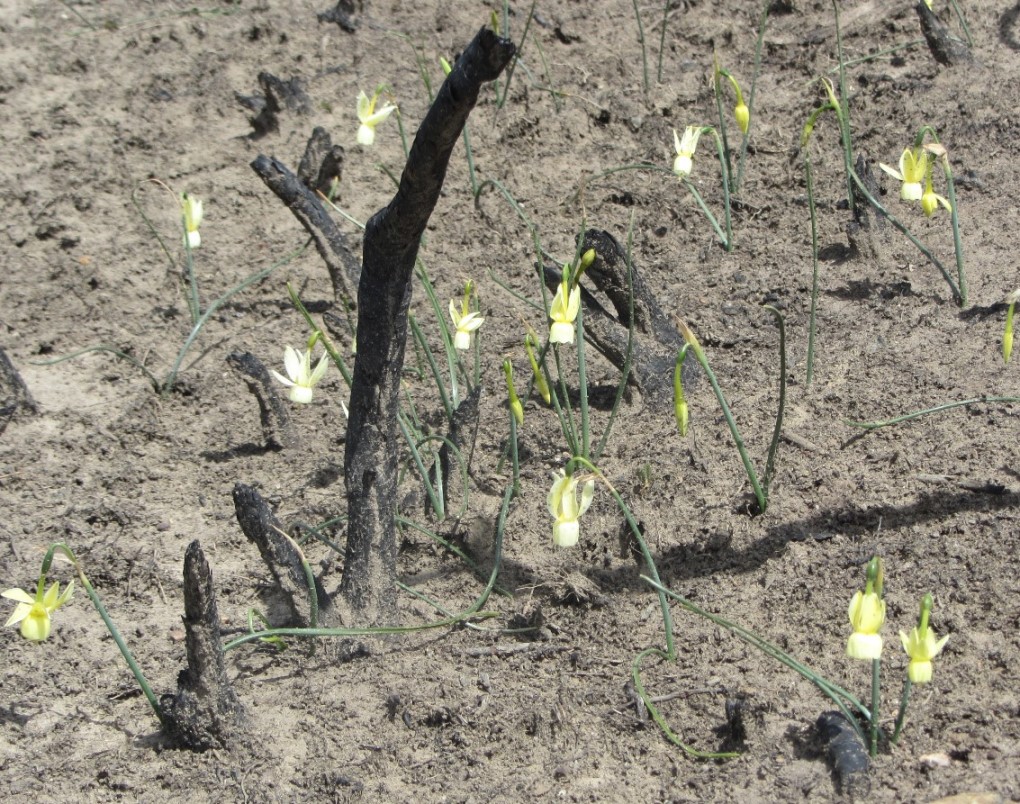
Spectacular postfire flowering of Narcissus triandrus subsp. pallidulus in a recently burnt Erica australis heathland (Bustares, Guadalajara, Spain, April 2015).

Narcissus postfire

Narcissus_pallidulus_sm

Objeción a los gastos militares (renta 2014)

May 1st, 2015 No comments

Como cada año, en estas fechas los españoles realizamos la declaración de la renta. Y esta es una buena oportunidad para quejarse de los excesivos gastos militares que nuestro gobierno realiza; hay muchas otras prioridades antes que financiar guerras (todas las guerras son perjudiciales para la humanidad). La idea básica de la objeción a los gastos militares es desviar a una ONG una parte de los impuestos que nos toca pagar al estado, la ONG que queramos (que probablemente hace mucho más por la paz que desperdiciar el dinero en armamento). En la declaración se descuenta la parte que has ingresado a la ONG para que al hacer el balance se tenga en cuenta. La cantidad de dinero a desviar es voluntaria; hay quien utiliza el porcentaje de nuestros impuestos que va a gasto militar (aproximadamente el 5.3%) y calcula ese porcentaje de la “Cuota resultante de la autoliquidación” en su declaración (casilla 589); otros desvían un cantidad fija, a veces simbólica (p.e., 84 euros en relación a los 84 países empobrecidos por la deuda; o 500 euros que es aproximadamente el gasto militar por habitante y año en España). Lo importante no es la cantidad desviada, si no el realizar un gesto cívico y comprometido por la paz. Aquí abajo doy más detalles de como hago yo la objeción así como algunas direcciones con abundante información. La objeción a los gastos militares es una opción “alegal” y no está considerada en la declaración. Es un acto cívico de protesta. Creo que lo máximo que puede ocurrir es que hacienda reclamen el dinero desviado. Yo he hecho la objeción cada año (desde mi primera declaración) y nunca he tenido ningún problema. Pasos a seguir:

  • No aceptar el borrador enviado por la Agencia Tributaria
  • Descargar el programa PADRE (renta2014): elije Windows, Linux o Mac, y se bajará el fichero Renta2014_*.exe; es necesario ejecutarlo para que se instale en el ordenador.
  • Incorporar los datos personales, ya sea bajándolos por internet (de la Agencia Tributaria) o manualmente. El programa PADRE permite incorporar los datos automáticamente a partir de DNI electrónico o a partir del número de referencia enviado por la Agencia Tributaria. Una vez incorporados, se pueden modificar si se detectan errores o faltan detalles. Si no haces ninguna modificación, debería dar igual al borrador enviado por la Agencia Tributaria.
  • Una vez finalizada la declaración, ir al apartado “N. Cálculo del impuesto y resultado de la declaración” (página 16(I)), subapartado “Retenciones y demás pagos a cuenta”. En una de las casillas que no utilices, poner la cantidad que desviáis; por ejemplo yo  en la casilla 599 (Cuotas del impuesto sobre la renta de no residentes) pongo 100 euros (por ejemplo).
  • Si vuestra declaración os salía a pagar (positiva), ahora os saldrá a pagar 100 euros menos; si os salía a cobrar (negativa), ahora os saldrá a cobrar 100 euros más.
  • Imprimir la declaración normalmente (o generáis el PDF).
  • Escribir a mano (o modificando el PDF) al lado de la casilla 599 “Por objeción”.
  • Ingresar los 100 euros (o lo que hayáis desviado) a la ONG que queráis. Algunas asociaciones que promueven y apoyan la objeción, hacen anualmente sugerencias de posibles ONGs a ingresar, pero se puede hacer en cualquiera.
  • Se entrega la declaración en un banco, dentro de un sobre que proporcionan los bancos. En el sobre se incluye: la declaración, el justificante de ingreso a la ONG, y una carta explicativa (por ejemplo descargar doc).
  • Para las estadísticas, es conveniente que avises que has realizado la objeción fiscal, por ejemplo, rellenado el formulario 2015, enviando un mensaje a tortuga@nodo50.org, o contactando con tu asociación antimilitarista local (por ejemplo, en Valencia: moc-valencia ).

Ver vídeo con las instrucciones detalladas

Más información: Nodo50/objecionFiscal | ¿como se hace? | EcologistasEnAccion.org,  gasto militar 2015 | Insumissia , Antimilitaristas 2012 | grupo tortuga: instrucciones | vídeo ilustrativo | BarcelonaTV |  MOC-València: objecció | MOC-València: facebook |

Algunos datos ilustrativos del 2015: El presupuesto de España a gasto militar es de 23.374 millones de euros (= 64 millones diarios o 503 euros por persona), que corresponde a 2,2% del PIB y al 5,3% de los PGE, y generará una deuda de 8.722 millones de euros. Además el gasto suele ser superior a los presupuestos (en un 18% como media). El 44% de los funcionarios del estado son militares. Más detalles: ver documento completo o un resume.


Entradas relacionadas: Crisis: gasto social y gasto-militar | No a la guerra otra vez | Gestionar la crisis es gestionar prioridades: gasto social vs militar | si vis pacem para pacem

Evolutionary fire ecology in pines

April 1st, 2015 No comments

Fire is an ancient and recurrent disturbance factor in our planet and has been present since the origin of terrestrial plants [1]. However, demonstrating whether fire has acted as an evolutionary force is not an easy task [2]. In this context, the emerging discipline of evolutionary fire ecology aims to understand the role of wildfires in shaping biodiversity. In a recent review paper I summarize what we have learned on evolutionary fire ecology by studying the iconic genus Pinus [3]. I suggest that the study of pines has greatly increased our understanding of the role of fire as an evolutionary pressure on plants.

Macro-evolutionary studies of the genus Pinus provide the oldest current evidence of fire as an evolutionary pressure on plants and date back to ca. 125 Million years ago (Ma). Micro-evolutionary studies show that fire traits are variable within and among populations, and especially among populations subject to different fire regimes. In addition, there is increasing evidence of an inherited genetic basis to variability in fire traits. Added together, pines provide compelling evidence that fire can exert an evolutionary pressure on plants and thus shape our biodiversity. In addition, evolutionary fire ecology is providing insights to improve the management of our pine forests under changing conditions. The lessons learned from pines may guide research on the evolutionary ecology in other taxa.

pinus-serotiny
Figure: Example of trait divergence among populations living under different fire regime. Serotiny (as % of closed cones) in populations living under frequent crown fires (red boxes) and in populations where crown-fires are rare (green boxes) for two pine species, Pinus halepensis (Allepo pine, left) and P. pinaster (maritime pine, right).

References
[1] Pausas, J.G. and Keeley, J.E. 2009. A burning story: The role of fire in the history of life. Bioscience 59: 593-601. [doi | jstor | BioOne | pdf]

[2] Keeley, J.E., Pausas, J.G., Rundel, P.W., Bond, W.J. & Bradstock, R.A. 2011. Fire as an evolutionary pressure shaping plant traits. Trends in Plant Science 16: 406-411. [doi | sciencedirect | trends | pdf]

[3] Pausas, J.G. (2015) Evolutionary fire ecology: lessons learned from pines. Trends in Plant Science 20(5): 318-324. [doi | sciencedirect | pdf]


Brazil

March 16th, 2015 No comments

I will give the following talks in Brazil:

March 20, 2015: “Flammability as en ecological and evolutionary driver“, 15:00 h Bilogia, Universidade Estatual de Campinas (UNICAMP), SP.

March 27, 2015: “Fire and biodiversity: a global perspective“, 9:00, Instituto Ciencias Biológicas, Universidade de Brasília

UPDATE:

IMG_20150328_191147311_sm
Vinicius Dantas (University of Campinas), Marcelo Simon (EMBRAPA, Brasilia) and myself having a caipirinha in Pirenópolis.

Ecology and evolution in fire-prone ecosystems

February 28th, 2015 2 comments

During the last years I’ve been working in many topics related to fire ecology and plant evolution in ecosystems subject to recurrent fires (mainly mediterranean and savanna ecosystems). Because I believe knowledge should be spread around easily, I make my results available to the public in my web page (see publications list) and in this blog. However, having the cumulative list of paper published each year is not very convenient for people searching for a specific topic. For this reason, I’m rearranging most of my articles by topics as follows:

1. Fire history
2. Fire regime: climate & fuel
3. Fire traits (resprouting, postfire germination, serotiny, bark thickness, flammability, data & methods)
4. Fire & plant strategies (in Mediterranean ecosystems, in pines, in savannas, community assembly)
5. Fire & evolution
6. Some fire-adapted species (Pinus halepensis, Quercus suber, Ulex parviflorus)
7. Fire & vegetation modelling
8. Plant-animal interactions
9. Restoration & conservation

See: fire-ecology-evolution.html

Some papers may be repeated if they clearly fit in more than one topic; some papers, mainly old ones, do not fit well in any of these topics and have not been included (at least at the moment), they still can be found in the section of publications sorted by year. I’m still working on this rearrangement, so some modifications are possible; and any comment is welcome.
I hope this is useful for somebody!

Publications: by year | by topic | books


Cultural trees: Cupressus sempervirens

January 4th, 2015 3 comments


Cupressus_sempervirens-Roma-01.2015_sm
Cupressus sempervirens (Mediterranean cypress; ciprés) and Colosseum, Rome,
1 January 2015 (photo: J.G. Pausas)

The ecology of bark thickness

December 1st, 2014 No comments

Bark is a vital and very visible part of woody plants, yet the functional and evolutionary ecology of the bark is still poorly understood. In a recent article I have studied one of the bark properties: bark thickness [1]. Bark thickness is very variable among woody plants and fire is a key factor selecting for a thick bark. This is because barks are very good heat insulators and under low intensity fires, small differences in bark thickness provides a great increase in the stem protection and survival. Consequently, at the global scale, an important proportion of the variability in bark thickness should be explained by the variability in fire regimes. In this paper I provide evidences supporting the role of fire regime in shaping bark thickness (in conjunction with other plant traits) on a global scale [1].

Forest environments with very frequent (and low intensity) understory fires select for trees with thick bark at the base of the bole. In some savannas, trees do not have specially thick barks as they tend to growth quickly to escape the height affected by grass fires. Savannas living in poor soils may not be able to growth quickly and thus trees can only survive if they have a very thick bark in the whole plant (including in the thin branches). In Mediterranean ecosystems, fires are less frequent than in savannas, and there is time for the accumulation of fine woody biomass. Consequently, fires burns intensely (crown fires) and thus small differences in bark thickness do not increase stem survival; in such conditions, most species have relatively thin barks. In wet tropical forests, tree barks are very thin because fire are very rare and thus a thick bark is not advantageous. In very arid ecosystems, fuels are too sparse for fire spread, and thus the observed variability in bark thickness is related to other factors like a response to water stress. In conclusion, fire regimes can explain a large proportion of the variability of bark thickness at the global scale, and thus this trait varies across ecosystems in a predictable manner.

thick-bark2

Figure: Examples of trees with thick bark: A. Myrcia bella (Myrtaceae, Brazil); B. Quercus suber (Fagaceae, Mediterranean Basin), in the cover of the book ‘Cork oak Woodlands on the Edge’ [2]; C: Eremanthus seidelii (Asteraceae, Brazil); and D: Enterolobium gummiferum (Fabaceae), small top branch. Photos from [1] and [2].

References

[1] Pausas, J.G. 2015. Bark thickness and fire regime. Functional Ecology   [doi | pdf | suppl.]

[2] Aronson J., Pereira J.S., Pausas J.G. (eds). 2009. Cork Oak Woodlands on the Edge: conservation, adaptive management, and restoration. Island Press, Washington DC. 315 pp. [The book]

NASA and Fire ecology

November 28th, 2014 No comments

NASA has featured our paper on the global fire-productivity relationship [1] in NASA Sensing Our Planet 2014

strange-bedfellows


Refereces
[1] Pausas J.G. & Ribeiro E. 2013. The global fire-productivity relationship. Global Ecol. & Biogeogr. 22: 728-736  [doi | pdf | blog post]

[2] Vizcarra N. 2014. Strange bedfellows. NASA Sensing Our Planet 2014 [link | PDF]

Alternative fire-driven vegetation states

November 1st, 2014 No comments

One of the clearest pieces of evidence for the role of fire in shaping vegetation is the occurrence of alternative vegetation types maintained by different fire regimes in a given climate. The different flammability of alternative communities generates different fire feedback processes that maintain contrasted vegetation types with clear boundaries in a given environment; and fire exclusion blurs this structure. This has been well documented in tropical landscapes (e.g., [1]) that are often mosaics of two alternative stable states – savannas and forests – with distinct structures and functions and sharp boundaries. Currently, there is an increasing evidence that alternative fire-driven vegetation states do occur in other environments, including temperate forests ([2, 3] and figure below). That is, the existence of alternative fire-driven vegetation states may be more frequent than previously thought, although human activities may favour one of the states and mask the original bistability.

modelv2

Figure: Factors determining the transition between two alternative vegetation states (fire sensitive forest and fire resilient shrubland) in a temperate landscape in Patagonia. Human factors (global warming, increased ignitions, and livestock grazing) favour transition to shrublands. From [2].

References
[1] Dantas V., Batalha MA & Pausas JG. 2013. Fire drives functional thresholds on the savanna-forest transition. Ecology 94:2454-2463.  [doi | pdf | appendix]

[2] Pausas, J.G. 2015. Alternative fire-driven vegetation states. Journal of Vegetation Science 26: 4-6 [doi | pdf | suppl.]

[3] Paritsis J., Veblen T.T. & Holz A. 2014. Positive fire feedbacks contribute to shifts from Nothofagus pumilio forests to fire-prone shrublands in Patagonia. J. Veget. Sci., 26.


Trait databases: BROT to EOL

October 26th, 2014 No comments

Some years ago we complied and published a database on plant traits related to fire for the Mediterranean basin, the BROT database [1, 2]. Now the Encyclopedia of Life (EOL, eol.org), which is an initiative to gather scientific knowledge about all animal and plant life on Earth, has incorporated the BROT database [link]! We are very happy that EOL consider BROT as a reliable source of information; this implies that our compilation effort is now much more widely accessible, with a friendly interface, and integrated with other sources of information. For instance, if you search a Mediterranean plant species in the EOL search engine (e.g., Cistus albidus), you get, a part from pictures, a description, and other details, a window with the trait information extracted from BROT (see the overview result here; you can also go to the full trait data). It is aslo possible to search by trait in all EOL databases (eol.org/traitbank). Note however that we were not responsible for translating the BROT database to the EOL format, so any error or misinterpretation during this process is not our fault! In fact we have never been asked or notified that EOL was going to incorporate BROT, I found it just by chance …

eol

References:

[1]  Paula S, Arianoutsou M, Kazanis D, Tavsanoglu Ç, Lloret F, Buhk C, Ojeda F, Luna B, Moreno JM, Rodrigo A, Espelta JM, Palacio S, Fernández-Santos B, Fernandes PM, and Pausas JG. 2009. Fire-related traits for plant species of the Mediterranean Basin. Ecology 90: 1420. [doi] [ESA journals] [Ecological Archives E090-094] [pdf]

[2] Paula S. & Pausas J.G. 2013. BROT: a plant trait database for Mediterranean Basin species. Version 2013.06. URL: http://www.uv.es/jgpausas/brot.htm


CONICET, Argentina

October 20th, 2014 No comments

Visiting Pedro Jaureguiberry and Sandra Díaz at CONICET, Córdoba, Argentina.

Talk:
??????????


Interview in “La Voz” (18 Oct 2014, in Spanish): La Voz (online version) | La Voz (printed version)


Heritability of serotiny

September 29th, 2014 No comments

Evolution by mean of natural selection requires three conditions: there is variation in the trait, this variation is linked to differences in fitness, and the variation is heritable (Darwin!). In many traits we do not have reliable information for the three processes. For a serotinous species, there is evidence that the level of serotiny is variable, and specially it varies in relation to the fire regime of the population. This is because serotiny increases fitness in crown-fire ecosystems and it is not advantageous in ecosystems that do not suffer frequent fires or in ecosystems with understory fires. We recently studied how serotiny of two pine species (Pinus halepensis and Pinus pinaster) varies within population and between populations with different fire regimes and also provided a meta-analysis of the relation between serotiny and fire from other published studies [1]. We also performed a genetic association study for serotiny using SNPs and showed that 17 loci explained ca. 29% of the serotiny variation found in the field in Pinus pinaster [2], suggesting that serotiny variation have a genetic basis. In our most recent paper we provide the first estimate of heritability for a fire trait; specifically we computed the norrow-sense heritability (h2) of serotiny in Pinus halepensis using the common garden approach [3]. We also evaluated whether fire has left a selection signature on the level of serotiny among populations by comparing the genetic divergence of serotiny with the expected divergence of neutral molecular markers (QST – FST comparison). Serotiny showed a significant heritability (h2 = 0.20). The quantitative genetic differentiation among provenances for serotiny (QST= 0.44) was significantly higher than expected under a neutral process (FST = 0.12), suggesting adaptive differentiation. Overall we showed that serotiny is a heritable trait and that it has been shaped by natural selection driven by fire.

ph-serotiny
Figure: Serotinous cones of Pinus halepensis (Foto: J.G. Pausas)

References:

[1] Hernández-Serrano A., Verdú M., González-Martínez S.C., Pausas J.G. 2013. Fire structures pine serotiny at different scales. American Journal of Botany 100 (12): 2349-2356. [doi | amjbot | pdf | supp. | blog]

[2] Budde, K. B., Heuertz, M., Hernández-Serrano, A., Pausas, J.G., Vendramin, G.G., Verdú, M. & González-Martínez, S.C. 2014. In situ genetic association for serotiny, a fire-related trait, in Mediterranean maritime pine (Pinus pinaster Aiton). New Phytologist 201: 230-241.  [doi | pdf | supp1 | supp2]

[3] Hernández-Serrano, A., Verdú, M., Santos-Del-Blanco, L., Climent, J., González-Martínez, S.C. & Pausas, J.G. 2014. Heritability and quantitative genetic divergence of serotiny, a fire-persistence plant trait. Annals of Botany 114: 571-577. [doi | pdf | suppl.]


The Fire Ecology journal now on JCR

August 22nd, 2014 No comments

The journal Fire Ecology (FE) has now been included in the Journal Citation Reports database (2013 JCR Edition, ISI) and thus, it has an Impact Factor. The 2013 impact factor is 1.156 which suggests that it is still a very minor ecology journal (ranking: 28/64 in Forestry and 104/140 in Ecology) but given that it is of open access, it has some potential for increasing success. For comparison, the International Journal of Wildland Fire, which is a more multidisciplinary journal for fire science has an IF= 2.506 (ranking = 5/64 in Forestry); other classical ecology journals have a much higher impact factor (e.g., Journal of Ecology: 5.69, Ecology: 5.00, Oikos: 3.56, Oecologia: 3.25). The FE journal is still very USA-oriented, and a strong internationalization would be needed. The last issue of the journal is also available at ISSUU, so it can be read it from Android systems. I must admit I have never published or submitted any paper to this journal (see details). Good luck to the FE in this new period!

FireEcol-journal

Journal archive in the web site of the Fire Ecology journal [link]

Evolutionary ecology of resprouting and seeding

July 15th, 2014 No comments

There are two broad mechanisms by which plant populations persist under recurrent fires: resprouting from surviving tissues, and seedling recruitment [1]. Species that live in fire-prone ecosystems can have one of these mechanisms or both [1]. In a recent review paper [2], we propose a model suggesting that changes in evolutionary pressures that modify adult (P) and juvenile (C) survival in postfire conditions (Fig. 1 below) determine the long-term success of each of the two regeneration mechanisms, and thus the postfire regeneration strategy: obligate resprouters, facultative species and obligate seeders (Fig. 2). Specifically we propose the following three hypotheses: 1) resprouting appeared early in plant evolution as a response to disturbance, and fire was an important driver in many lineages; 2) postfire seeding evolved under conditions where fires were predictable within the life span of the dominant plants and created conditions unfavorable for resprouting; and 3) the intensification of conditions favoring juvenile survival (C) and adult mortality (P) drove the loss of resprouting ability with the consequence of obligate-seeding species becoming entirely dependent on fire to complete their life cycle, with one generation per fire interval (monopyric life cyle). This approach provides a framework for understanding temporal and spatial variation in resprouting and seeding under crown-fire regimes. It accounts for patterns of coexistence and environmental changes that contribute to the evolution of seeding from resprouting ancestors. In this review, we also provide definitions and details of the main concepts used in evolutionary fire ecology: postfire regeneration traits, postfire strategies, life cycle in relation to fire, fire regimes (Box 1), costs of resprouting (Box 2), postfire seeding mechanisms (Box 3), and the possible evolutionary transitions (Box 4).


Fig2_sm
Fig. 1 : Main factors affecting adult and offspring seedling survival (P and C, respectively), and thus the P/C ratio, in fire-prone ecosystems (from Pausas & Keeley 2014 [2]).


Fig3_sm

Fig. 2: The changes in the probability of resprouting along an adult-to-offspring survival (P/C) gradient are not linear but show two turning points related to the acquisition of key innovations: the capacity to store a fire-resistant seed bank (postfire seeding), and the loss of resprouting capacity. Changes in P/C ratio may be produced by different drivers (Fig. 1) which drove the rise of innovations during evolution, e.g., during the increasing aridity from the Tertiary to the Quaternary (from Pausas & Keeley 2014 [2]).


Refecences

[1] Pausas, J.G., Bradstock, R.A., Keith, D.A., Keeley, J.E. 2004. Plant functional traits in relation to fire in crown-fire ecosystems. Ecology 85: 1085-1100. [doi | pdf | esa | jstor]

[2] Pausas J.G. & Keeley J.E. 2014. Evolutionary ecology of resprouting and seeding in fire-prone ecosystems. New Phytologist 204: 55-65 [doi | wiley | pdf]


Climate-independent fire regime changes

May 16th, 2014 No comments

It is well-known that fire regimes are strongly linked to climate, however, there are examples in which most variability in fire regime changes are better attributed to drivers other than climate. For instance, vegetation (fuel structure and continuity) also plays a role in shaping fire regimes [1-5]. In a recent paper [6], we reviewed evidences from different environmental and temporal settings of abupt fire regimes changes that are not directly attributed to climatic changes, but to changes driven by (i) fauna, (ii) invasive plant species, and (iii) socio-economic and policy changes. All these drivers might generate nonlinear effects of landscape changes in fuel structure; that is, they generate fuel changes that can cross thresholds of landscape continuity and thus drastically change fire activity (figure below). The importance of climate-independent factors in abrupt fire regime changes can be viewed positively: while climate is very difficult to modify at short term, fuels can potentially be managed to shape fire regimes and to mitigate the effects of global warming [7]. However the success of these actions may be diverse, depending on the historical fire regimes and the adaptive traits of the species in the community [8].

Fig1_land3seed12

Figure: Schematic representation of how a gradual change in a driver (e.g., a constant colonization or invasion of a flammable plant) can produce an abrupt change in landscape structure (e.g., continuity of the flammable vegetation). The bottom panel represents the changes through time in mean and maximum patch size in an idealized landscape that is invaded by plants (green cells) with a constant probability (p= 0.01 in each time step). The upper panel shows three snapshots of these dynamics (time steps = 25, 75 and 125, also represented by vertical lines in the bottom panel). From Pausas & Keeley [6].

References

[1] Pausas, J.G. 2004. Changes in fire and climate in the eastern Iberian Peninsula (Mediterranean basin). Climatic Change 63: 337-350. [pdf | doi]

[2] Pausas J.G. & Bradstock R.A. 2007. Fire persistence traits of plants along a productivity and disturbance gradient in Mediterranean shrublands of SE Australia. Global Ecology & Biogeography 16: 330-340.  [pdf | doi]

[3] Pausas J.G. & Paula S. 2012. Fuel shapes the fire-climate relationship: evidence from Mediterranean ecosystems. Global Ecol. & Biogeogr. 21: 1074-1082.  [doi | pdf | supp]

[4] Pausas J.G. & Fernández-Muñoz S. 2012. Fire regime changes in the Western Mediterranean Basin: from fuel-limited to drought-driven fire regime. Climatic Change 110: 215-226.  [doi | springer | pdf]

[5] Pausas J.G. & Ribeiro E. 2013. The global fire-productivity relationship. Global Ecol. & Biogeogr. 22: 728-736. [doi | pdf | appendix]

[6] Pausas J.G. & Keeley J.E., 2014. Abrupt climate-independent fire regime changes. Ecosystems 17: 1109.1120 [doi | pdf] – New!

[7] Towards prescribed fires, jgpausas.blogs.uv.es, 7 Oct 2013.

[8] Keeley J.E., Pausas J.G., Rundel P.W., Bond W.J., Bradstock R.A. 2011. Fire as an evolutionary pressure shaping plant traits. Trends in Plant Science 16(8): 406-411. [doi | trends | pdf]


Vive la différence!

April 20th, 2014 No comments

This post is a bit off the main topics of this blog, but I found an interesting study that I would like to share [1]. Using virtual reality tools, the authors of this study performed an experiment placing white people with a body of black people for about 12 minutes. They compared the results of a test for racial bias performed few days before the experiment with the results of the same test performed after the experiment, and found a clear reduction in the scores! I guess virtual reality could be a tool to increase empathy, and therefore respect to the difference. So perhaps racism is curable!

colours-variability_sm

Figure:  Team of happy people working together (www.dreamstime.com; top left), variability of the Cuban Polymita (top right) and variability of the Harlequin ladybird (Harmonia axyridis; bottom; source).

References
[1] Peck TC, Seinfeld S, Aglioti SM, Slater M. 2013. Putting yourself in the skin of a black avatar reduces implicit racial bias, Consciousness and Cognition, 22, 779-787. [doi].  More virtual experiments at: http://presence-thoughts.blogspot.com.es


Postfire blooming of Asphodelous

April 5th, 2014 No comments

The 4th of February, 2014, a forest fire burnt ca. 200 ha in Segorbe, near Valencia, eastern Spain. Two months later (1st April 2014), few plants had started to resprout, others had started to germinate, but there were three species that had resprouted very quickly and were already flowering: Asphodelous cerasiferus (= A. ramosus; Spanish: gamón), Iris lutescens, and Asparagus horridus; the first showed an spectacular blooming (pictures below).

Asphodelus-bloom
Spectacular postfire bloom of Asphodelous cerasiferus in Segorbe, near Valencia, Spain (photos by MC Castellanos & JG Pausas, two months after fire).

Fire drives trait divergence: smoke-induced germination

April 3rd, 2014 No comments

There is an increasing evidence that recurrent fires are driving within species phenotypic variability, and that different fire regimes can generate trait divergence among populations [1]. For instance, populations of the annual species Helenium aromaticum (Asteraceae) growing under different fire histories in Chile have different seed traits in such a way that the anthropogenic increase in fire frequency selected for an increasing in seed pubescence [2]. In the Mediterranean Basin there is also evidence of phenotypic divergence among populations under different fire regimes: Ulex parviflorus (Fabaceae) plants living under high fire frequency are more flammable than those growing in sites that have not suffered fires [3-5]; Pinus halepensis and P. pinaster living under high crown-fire frequency have higher serotiny that those living in areas that rarely burn in crown fires [6]

A recent paper add further examples of this fire-driven trait divergence: Vandvik et al. show that smoke-induced germination is observed in populations of Calluna vulgaris (Ericaceae) from traditionally burnt coastal heathlands of Norway but it is lacking in populations from other habitats with infrequent fires [7]. The results are also consistent with the suggestion that smoke-induced germination is a fire adaptation [8-9].

Calluna-smoke-germination

Figure: Probability of germination of Calluna vulgaris in relation to time (days) since sowing for smoke-treated (pink) and control (grey) seeds, in coastal and inland heathlands of Norway. From Vandvik et al. 2014 [7].

References:

[1] Pausas, J. G. and D. W. Schwilk. 2012. Fire and plant evolution. New Phytologist 193 (2). [doi | pdf | blog]

[2] Gómez-González S, Torres-Díaz C, Bustos-Schindler C, Gianoli E, 2011. Anthropogenic fire drives the evolution of seed traits. PNAS 108: 18743-18747. [doi | blog]

[3] Pausas J.G., Alessio G., Moreira B. & Corcobado G. 2012. Fires enhance flammability in Ulex parviflorus. New Phytologist 193: 18-23. [doi | pdf | blog]

[4] Pausas J.G. & Moreira B. 2012. Flammability as a biological concept. New Phytologist 194: 610-613. [doi | wiley | pdf]

[5] Moreira B., Castellanos M.C., Pausas J.G. 2014. Genetic component of flammability variation in a Mediterranean shrub. Molecular Ecology 23: 1213-1223. [doi | pdf | suppl. | data:dryad | blog]

[6] Hernández-Serrano A., Verdú M., González-Martínez S.C., Pausas J.G. 2013. Fire structures pine serotiny at different scales. American Journal of Botany 100 (12): 2349-2356. [doi | amjbot | pdf | supp. | blog]

[7] Vandvik, V., J. P. Töpper, Z. Cook, M. I. Daws, E. Heegaard, I. E. Måren, and L. G. Velle. 2014. Management-driven evolution in a domesticated ecosystem. Biology Letters 10 (2): 20131082. [doi]

[8] Pausas J.G. & Keeley J.E. 2009. A burning story: The role of fire in the history of life. BioScience 59: 593-601 [doi | jstor | BioOne | pdf | scribd | ppt slides | post]

[9] Keeley J.E., Pausas J.G., Rundel P.W., Bond W.J., Bradstock R.A. 2011. Fire as an evolutionary pressure shaping plant traits. Trends in Plant Science 16(8): 406-411. [doi | trends | pdf]


New fire books

March 23rd, 2014 No comments

Two new fire books has been recently published! And both have a global and interdisciplinary perspective. The first is edited by Claire Belcher (2013; [1]), and each of the 16 chapters is a scientific article written by different specialists (a total of 25 different authors, many of them from UK institutions); it includes few colour plates. As the publisher says, “the book shows how knowledge of fire phenomena and the nature of combustion of natural fuels can be used to understand modern wildfires, interpret fire events in the geological record and to understand the role of fire in a variety of Earth system processes ”. This book has perhaps little on fire ecology, and it is more focussed on fire history at the geological scale, combustion details and atmospheric impacts; all these topics are important for understanding fires at the global scale. The second book (Scott et al. 2014; [2]) is a full-colour textbook on fire written by five authors (two of them had also participated in the other book). This is probably the first general textbook on fire science ever published, and as such it covers all topics related to fire although with relatively little depth. Thus it provides a summary of the current knowledge on fire at a global scale. In the words of the publisher, it “is designed to provide a synthesis of contemporary thinking; bringing together the most powerful concepts and disciplinary voices to examine, in an international setting, why planetary fire exists, how it works, and why it looks the way it does today”.

firebookscover

[1] Belcher, C.M. (ed) 2013. Fire Phenomena and the Earth System: An Interdisciplinary Guide to Fire Science. Wiley.

[2] Scott, A.C., Bowman, D.M.J.S., Bond, W.J., Pyne, S.J. & Alexander, M.E. 2014. Fire on Earth: An Introduction. Wiley.

New fire book in 2012: link


Proyecto VIRRA

February 28th, 2014 No comments

El proyecto “El papel del fuego en la Variabilidad Intraespecífica (fenotípica y genética) de plantas del matoRRAl mediterráneo (VIRRA)” finalizó hace unos meses. Aquí se puede ver un resumen y los principales productos de este proyecto: enlace.

Ulex parviforus_juli_sm

La aliaga (Ulex parviflorus) es una de las principales especies estudiadas en VIRRA [1, 2].

[1] Ulex born to burn, jgpausas.blogs.uv.es, 9/Nov/2011

[2] Ulex born to burn (II): genetic basis of plant flammability,  jgpausas.blogs.uv.es, 25/Jan/2014

Ulex born to burn (II): genetic basis of plant flammability

January 25th, 2014 No comments

In an previous study we found that Ulex parviflorus (Fabaceae) populations that inhabit in recurrently burn areas (HiFi populations) were more flammable than populations of this species growing in old-fields where the recruitment was independent of fire (NoFi populations) [1,2, 3]. That is, HiFi plants ignited quicker, burn slower, released more heat and had higher bulk density than NoFi plants. Thus, it appeared that repeated fires selected for individuals with higher flammability, and thus driving trait divergence among populations living in different fire regimes. These results were based on the study of plant flammability (phenotypic variability) without knowing whether plant flammability was genetically controlled. In a recent study using the same individuals [4], we show that phenotypic variability in flammability was correlated to genetic variability (estimated using AFLP loci) [figure below]. This result provide the first field evidence supporting that traits enhancing plant flammability have a genetic component and thus can be responding to natural selection driven by fire [5]. These results highlight the importance of flammability as an adaptive trait in fire-prone ecosystems.

Ulex-flam-AFLP

Figure: Relationship between flammability and genotypic variability at individual level in Ulex parviflorus (red symbols: individuals in HiFi populations; green symbols: individuals in NoFi populations). Variations in flammability are described using the first axis of a Principal Component Analysis (PCA1) performed from different flammability traits, and genetic variability is described using the first axis of a Principal Coordinate Analysis (PCo1) from the set of AFPL loci that were significantly related to flammability. See details in [4].

References
[1] Ulex born to burn, jgpausas.blogs.uv.es, 9/Nov/2011

[2] Pausas J.G., Alessio G., Moreira B., Corcobado G. 2012. Fires enhance flammability in Ulex parviflorus. New Phytologist 193:18-23 [doi | wiley | pdf]

[3] Pausas J.G. & Moreira B. 2012. Flammability as a biological concept. New Phytologist 194: 610-613.  [doi | wiley | pdf]

[4] Moreira B., Castellanos M.C., Pausas J.G. 2014. Genetic component of flammability variation in a Mediterranean shrub. Molecular Ecology 23: 1213-1223 [doi | pdf | data:dryad]

[5] Keeley J.E., Pausas J.G., Rundel P.W., Bond W.J., Bradstock R.A. 2011. Fire as an evolutionary pressure shaping plant traits. Trends in Plant Science 16: 406-411. [doi | trends | pdf]


Serotiny

November 16th, 2013 No comments

Serotiny is the delayed seed release for more than a year by retaining the seeds in a woody structure [1]. This implies an accumulation of a canopy seed bank. Serotiny confer fitness benefits in environments with frequent crown-fires, as the heat opens the cones and seeds are dispersed in the post-fire bed which is rich in resource and the competition and predation are low. It is typical of many Proteaceae and some conifers, like some pine species [1, 2; figure below].

Two recent papers analyse the serotiny of two mediterranean pines Pinus halepensis and Pinus pinaster [3, 4]. P. halepensis show higher proportion of serotinous cones than P. pinaster, but the latter retain the cones for longer [3]. The two species show high variability of serotiny within and between populations, but they show a clear pattern of higher serotiny in populations subject to high frequency of crown-fires than those living in areas where crown-fires are rare or absent. This is true either considering serotiny as the proportion of serotinous cones or as the age of the cones stored. Compared with other pines worldwide, the strength of the fire-serotiny relationship in P. pinaster is intermediate, and in P. halepensis is among the highest known [3]. For P. halepensis (the species with higher % serotiny), populations in high fire recurrence regimes have higher fine-scale spatial aggregation of serotiny than those inhabiting low fire recurrence systems. This phenotypic spatial structure generated by fire could be a consequence of the spatial genetic structure of the population. The second study used genomic tools to search for a genetic association for serotiny [4]. The analysis of 384 SNPs of 199 individuals of P. pinaster (in 3 populations included in the previous study [3])  shows that 17 loci were associated with serotiny and explain all together ca. 29% of the serotiny variation found in the field. All these results adds further evidence to the emerging view that fire shapes intraspecific variability of traits and generates phenotypic divergence between populations [5, 6, 7].

Figure: Serotinous cones of Pinus pinaster (Foto: K.B. Budde)

References:

[1] Keeley J.E., Bond W.J., Bradstock R.A., Pausas J.G. & Rundel P.W. 2012. Fire in Mediterranean Ecosystems: Ecology, Evolution and Management. Cambridge University Press.  [The book]

[2] He T, Pausas JG, Belcher CM, Schwilk DW, Lamont BB. 2012. Fire-adapted traits of Pinus arose in the fiery Cretaceous. New Phytologist 194: 751-759. [doi | wiley | pdf (suppl.)]

[3] Hernández-Serrano A., Verdú M., González-Martínez S.C., Pausas J.G. 2013. Fire structures pine serotiny at different scales. American Journal of Botany 100: 2349-2356 [doi | amjbot | pdf | supp.]

[4] Budde, K. B., Heuertz, M., Hernández-Serrano, A., Pausas, J.G., Vendramin, G.G., Verdú, M. & González-Martínez, S.C. 2014. In situ genetic association for serotiny, a fire-related trait, in Mediterranean maritime pine (Pinus pinaster Aiton). New Phytologist  201: 230-241 [doi | pdf]

[5] Keeley J.E., Pausas J.G., Rundel P.W., Bond W.J., Bradstock R.A. 2011. Fire as an evolutionary pressure shaping plant traits. Trends in Plant Science 16(8): 406-411. [doi] [trends] [pdf]

[6] Pausas, J. G., Schwilk, D. W. 2012. Fire and plant evolution. New Phytologist, 193:301-303. [doi | wiley | pdf]

[7] Pausas J.G., Alessio G., Moreira B. & Corcobado G. 2012. Fires enhance flammability in Ulex parviflorus. New Phytologist 193: 18-23. [doi | wiley | pdf]


Physiological differences between resprouters and seeders

November 9th, 2013 No comments

The ability to resprout and to recruit after fire are two extremely important traits for the persistence in fire-prone ecosystems [1,2], and they define three life histories: obligate resprouters, obligate seeders (non-resprouters), and facultative seeders. After a fire, obligate seeders die and recruit profusely from the seeds stored in the seed bank [3-5]. In contrast, resprouters survive after fire and their above-ground tissues regenerate from protected (often below-ground) buds by using stored carbohydrates [6]. Facultative seeders not only recruit profusely after fire, but are also able to resprout. In fact, seeders and resprouters have different regeneration niches: seedling regeneration of obligate resprouters is not linked to fire, and they recruit during the inter-fire period under sheltered conditions (i.e., under vegetation cover), while seedling regeneration of seeders occurs in open postfire environments. Given the marked difference in water availability between microsites under vegetation and microsites open to the sun under Mediterranean conditions, seedlings of resprouters and seeders are subjected to different water-stress conditions, and thus they are expected to have different physiological attributes. Despite these differences, resprouters and seeders co-exist, are often well-mixed on local and landscape scales [7,8], and represent the two main types of post-fire regeneration strategies in Mediterranean ecosystems [2].

A recent study demonstrates marked differences in physiological attributes between seedlings of seeders and resprouters [9]: Seeders show a range of physiological traits that better deal with water-limited and highly variable conditions (e.g., higher resistance to xylem cavitation, earlier stomatal closure with drought, higher leaf dehydration tolerance), but they are also capable of taking full advantage of periods with high water availability (greater efficiency in conducting water through the xylem to to sustain high gas exchange rates when water is available). Conversely, resprouter species are adapted to more stable water availability conditions, favoured by their deeper root system, but they also display traits that help them resist water shortages during long summers.

Previous studies already showed marked differences between seeders and resprouters in a range of attributes: resprouters tend to exhibit a deeper root-system, while seedling root structure of seeders are more efficient in exploring the upper soil layer [10]. Leaves of seeders show higher water use efficiency (WUE) and higher leaf mass per area (LMA; i.e., higher sclerophylly, lower SLA) [11]. Seeds of seeder species are more tolerant to heat shocks and have greater heat-stimulated germination [3]. All these differences support the idea that they are distinct syndromes with different functioning characteristics at the whole plant level and suggest that they undertook different evolutionary pathways [12].

Figure: Coexistence of resprouters (R+) and seeders (R-) in postfire conditions near Valencia, Spain. (Foto: A. Vilagrosa).


References:

[1] Pausas, J.G., Bradstock, R.A., Keith, D.A., Keeley, J.E. & GCTE Fire Network. 2004. Plant functional traits in relation to fire in crown-fire ecosystems. Ecology 85: 1085-1100. [jstor |[pdf | Ecological Archives E085-029]

[2] Keeley J.E., Bond W.J., Bradstock R.A., Pausas J.G. & Rundel P.W. 2012. Fire in Mediterranean Ecosystems: Ecology, Evolution and Management. Cambridge University Press. [The book]

[3] Paula S. & Pausas J.G. 2008. Burning seeds: Germinative response to heat treatments in relation to resprouting ability. Journal of Ecology 96 (3): 543 – 552. [doi | pdf]

[4] Moreira B., Tormo J., Estrelles E., Pausas J.G. 2010. Disentangling the role of heat and smoke as germination cues in Mediterranean Basin flora. Annals of Botany 105: 627-635. [doi | pdf | blog]

[5] Moreira B. & Pausas J.G. 2012. Tanned or burned: The role of fire in shaping physical seed dormancy. PLoS ONE 7(12): e51523. [doi | plos | pdf | blog]

[6] Moreira B., Tormo J, Pausas J.G. 2012. To resprout or not to resprout: factors driving intraspecific variability in resprouting. Oikos 121: 1577-1584. [doi | pdf]

[7] Verdú M, & Pausas JG 2007. Fire drives phylogenetic clustering in Mediterranean Basin woody plant communities Journal of Ecology 95 (6), 1316-323 [doi | pdf]

[8] Ojeda, F., Pausas, J.G., Verdú, M. 2010. Soil shapes community structure through fire. Oecologia 163:729-735. [doi | pdf | blog]

[9] Vilagrosa A., Hernández E.I., Luis V.C., Cochard H., Pausas, J.G. 2014. Physiological differences explain the co-existence of different regeneration strategies in Mediterranean ecosystems. New Phytologist 201 : xx-xx [doi | pdf | suppl.] – NEW

[10] Paula S. & Pausas J.G. 2011. Root traits explain different foraging strategies between resprouting life histories. Oecologia 165:321-331. [doi | pdf | blog]

[11] Paula S. & Pausas J.G. 2006. Leaf traits and resprouting ability in the Mediterranean basin. Functional Ecology 20: 941-947. [doi | pdf | blog]

[12] Verdú M. & Pausas J.G. 2013. Syndrome-driven diversification in a Mediterranean ecosystem. Evolution 67: 1756-1766. [doi | pdf | blog]


Towards prescribed fires

October 7th, 2013 No comments

In the latest issue of Science (Oct 4th, 2013), there is a forum paper with some suggestion for the management of fires and forests in the face of changing climates [1]. Basically, the authors suggest that policy focused on fire suppression only delays the inevitable, promising more dangerous and destructive forests fires. They emphasize the importance of strategically managing wildfires and the use of prescribed fires in combination with mechanical fuel treatments to create fire resilient landscapes. In addition, the journal Frontiers in Ecology and Environment has recently published an special issue on prescribed burns in different ecosystems worldwide [2]. Fires are very important processes on many ecosystems [3,4], and what is important is to shape fire regimes to be sustainable (socially and ecologically). A zero-tolerance fire policy (which still dominates in many countries) cannot work in the long-term, especially in seasonal climates, as the high fuel accumulation coupled with a warming climate may drive the system to large and intense fires that threaten both people and biodiversity; and this may occurs despite major economic investments in fire prevention and suppression.


Foto: Prescribed understory burn of a mixed conifer forest in the Sierra Nevada, California. From [3].

References:
[1] Stephens, S.L., Agee, J.K., Fulé, P.Z., North, M.P., Romme, W.H., Swetnam, T.W., Turner, M.G., 2013. Managing forests and fire in changing climates. Science 342, 41-42.

[2] Perspectives on prescribed burning. Front. Ecol. Environ. 11, www.esajournals.org/toc/fron/11/s1

[3] Pausas J.G. & Keeley J.E. 2009. A burning story: The role of fire in the history of life. BioScience 59: 593-601 [doi | pdf]

[4] Keeley J.E., Bond W.J., Bradstock R.A., Pausas J.G. & Rundel P.W. 2012. Fire in Mediterranean Ecosystems: Ecology, Evolution and Management. Cambridge University Press. [The book]


Smoke-stimulated recruitment

September 16th, 2013 No comments

In many plant species from mediterranean ecosystems, germination is promoted by fire [1]; this effect may be driven by the heat [e.g., 2-4] or by the chemicals produced by the fire (e.g., smoke, 4,5]). Most information regarding to smoke-stimulated germination in the Mediterranean Basin comes from a few experiments performed in laboratory conditions. This approach does not consider factors that occur in the field, such as species interactions, density-dependent processes or the fact that seeds spent time in the soil. A recent field experiment performed in eastern Spain show that smoke increase overall seedling recruitment, specially seedlings of annual plant species [6]. However, despite most species had higher seedling establishment in the smoke than in the control subplots, there were very few species in which the effect of smoke was statistically significant, suggesting that the community response to smoke cannot be inferred from individual species; it is the sum of small differences in each species towards the same direction that produces a significant pattern at community scale. This emerging property of the community is often neglected by only considering germination experiments in the laboratory. The results also suggest that the effect of smoke in annual species of the Mediterranean Basin might be more relevant than previously thought.

References
[1] Keeley J.E., Bond W.J., Bradstock R.A., Pausas J.G. & Rundel P.W. 2012. Fire in Mediterranean Ecosystems: Ecology, Evolution and Management. Cambridge University Press. [The book]

[2] Paula S. & Pausas J.G. 2008. Burning seeds: Germinative response to heat treatments in relation to resprouting ability. Journal of Ecology 96 (3): 543 – 552. [pdf | doi]

[3] Moreira B. & Pausas J.G. 2012. Tanned or burned: The role of fire in shaping physical seed dormancy. PLoS ONE 7: e51523. [doi | plos | pdf | blog]

[4] Moreira B., Tormo J., Estrelles E., Pausas J.G. 2010. Disentangling the role of heat and smoke as germination cues in Mediterranean Basin flora. Annals of Botany 105: 627-635. [pdf | doi | post]

[5] Smoke-stimulated germination, jgpausas.blogs.uv.es, 2/Dec/2011.

[6] Tormo, J., B. Moreira, and J. G. Pausas. 2014. Field evidence of smoke-stimulated seedling emergence and establishment in Mediterranean Basin flora. Journal of Vegetation Science 25: 771-777 [doi | wiley | pdf]

Afrotropical and neotropical savannas are different

July 29th, 2013 No comments

Savannas are typically ecosystems dominated by grasses with a variable tree density (e.g., [1]). However, the savanna biome is very large, it occurs in different continents, and includes a large variability in the vegetation structure and composition. Fire and herbivory are the main disturbance factors shaping savannas worldwide and because the different climatic conditions and the different evolutionary histories among different savannas, fire and herbivory regimes also varies among savannas. Because plants are not adapted to fire and herbivory “per se” but to specific regimes of herbivory and fire [2], we expect different strategies to cope with these disturbances in different savannas. In this framework, we have recently compared savannas from Africa and from South America (afrotropical and neotropical savannas respectively) [3]: Afrotropical savannas have a dryer climate and are more intensely grazed than neotropical savannas, and thus the amount of available fuel is typically lower in afrotropical than in the neotropical savannas. Consequently fires tend to be more intense in neotropical savannas. In afrotropical conditions, young woody plants tend to grow quickly in height to soon locate the canopy above the flame zone before the next fire, and above the browsing height. Thus these plants tend to have a pole-like or lanky architecture (the lanky strategy). In contrast, in neotropical savannas where herbivory pressure is lower they require a thick corky bark for protection against relatively intense fires (the corky strategy) [3]. Despite the two fire escape strategies appear in both Africa and South America, we suggest that the lanky strategy is more adaptive in afrotropical savannas, while the corky strategy is more adaptive in neotropical savannas [3].


Figure: Diospyros hispida A.DC. (Ebenaceae), a South American example of a plant with the corky strategy. Although the trunk was fully burned one year earlier (dark branches and trunk), the bark protected the lateral buds which enabled epicormic resprouting and the formation of lateral resprouts (light grey branches). This photo was taken in Emas National Park (cerrado ecosystem, Brazil) at the beginning of the rainy season (2011) when this deciduous plant starts to produce new leaves (Photo: V.L. Dantas). For an example of the lanky strategy see [4].

References:
[1] Dantas V., Batalha, MA & Pausas JG. 2013. Fire drives functional thresholds on the savanna-forest transition Ecology 94:2454-2463. [doi | pdf | blog]

[2] Keeley J.E., Pausas J.G., Rundel P.W., Bond W.J., Bradstock R.A. 2011. Fire as an evolutionary pressure shaping plant traits. Trends Plant Sci. 16(8): 406-411. [doi | trends | pdf]

[3] Dantas V. & Pausas J.G. 2013. The lanky and the corky: fire-escape strategies in savanna woody species Journal of Ecology 101: 1265-1272 [doi | pdf]

[4] Archibald, S. & Bond, W.J. 2003. Growing tall vs growing wide: tree architecture and allometry of Acacia karoo in forest, savanna, and arid environments. Oikos, 102: 3-14.


Incendios del 2012 en Valencia: una año después

June 28th, 2013 4 comments

Hace ahora un año dos grandes incendios, prácticamente simultáneos y cerca de la ciudad de Valencia, conmocionaron a la población. El incendio de Andilla-Alcublas afectó unas 21 000 ha y el de Cortes de Pallás-Dos Aguas unas 30 000 ha; raramente se dan incendios de estas dimensiones. Gracias a la extrema capacidad de las plantas y animales para recuperarse de estos eventos, un año después vemos el paisaje verde y lleno de vida (Fig. 1). En la zona afectada por los incendios se observa un gran número de plantas en flor, así como elevada actividad de animales (insectos polinizando, lagartijas, eslizones, serpientes, etc.). La sensación es una buena recuperación, a excepción de algunas de las zonas donde se está extrayendo los árboles quemados. Durante el primer año después de un incendio el suelo es relativamente frágil, de manera que entrar con máquinas o arrastrar troncos, puede reducir la regeneración natural y aumenta la probabilidad de erosión del suelo, especialmente en zonas con elevada pendiente (Fig. 2). Además, el dejar los árboles muertos en pie favorece las condiciones microclimáticas para la vegetación, genera hábitat para infinidad de invertebrados y sirve de posadero para aves que defecan y dejas semillas que también ayudan a la regeneración (efecto percha).


Fig. 1. Diversas imágenes tomadas a principios de junio 2013, casi un año después de los incendios, en Andilla y Cortes.


Fig. 2. Zona donde se está extrayendo la madera quemada, al oeste del incendio de Cortes-Dos Aguas (Junio 2013).
 

Información adicional

Life 15 days after the large fires in Valencia. jgpausas.blogs.uv.es 22/7/2012

Incendios forestales en Valencia, Junio 2012. jgpausas.blogs.uv.es 4/7/2012

De incendios y cipreses,  (1) jgpausas.blogs.uv.es 29/9/2012,  (2) jgpausas.blogs.uv.es 7/10/2012,  (3) jgpausas.blogs.uv.es 22/6/2013

Incendios forestales, una visión desde la ecología
 

De incendios y cipreses (3)

June 22nd, 2013 3 comments

Ha llegado el verano y con ello el riesgo de incendios forestales. En los medios de comunicación de España vuelven a salir noticias sobre las bondades de los cipreses para reducir los incendios. Hace unos días  (el 17 Junio 2013) en la portada del diario Levante (Valencia) se leía “La diputación de plantará cipreses en Los Serranos para que actúen de barrera contra los incendios”.  Similares mensajes se publican en otros medios (Los cipreses reducen el avance de un incendio forestal, Un estudi assegura que els xiprers poden servir per reduir l’avanç dels incendis forestals, etc…). Todos estos mensajes se basan en el hecho que el año pasado en el incendio ocurrido en Andilla-Alcublas había una plantación de cipreses que no se vio afectada por el fuego, y se extendió el falso mensaje de que los cipreses podían ser “ignífugos” [1]. Ya hablamos en su día de que los cipreses de esa plantación no se quemaron, básicamente porque están rodeados de un cortafuegos, y así se puede ver en las fotografías y detalles que presenté el año pasado (ver detalles en [ 2 ] y [ 3 ] ).

Además, un estudio reciente analiza en el laboratorio la inflamabilidad de ramitas de ciprés [4], y las conclusiones son claras; textualmente: “Regarding the flammability of its live leaves, Cupressus sempervirens was not very flammable; however, because this species had the greatest amount of dead material which was ranked extremely flammable, this ornamental species should be avoided in wildland-urban interface, especially close to houses“. En decir, que aunque las hojas verdes del ciprés se pueden considerar relativamente poco inflamables, este árbol suele acumular ramas secas que son muy inflamables y por lo tanto representan un peligro para los incendios. Estas conclusiones son coherentes con el hecho de que en algunos países está prohibido plantar cipreses en jardines de casas que lindan con el monte, precisamente por su peligro con los incendios. En otras palabras, no hay ninguna base que apoye la idea de que los cipreses puedan ser útiles para la lucha contra los incendios, e incluso podrían ser contraproducentes. Por lo tanto no se entiende la decisión de la Diputación de Valencia de plantar cipreses en los montes valencianos. Además, los cipreses no son naturales de esta tierra, con lo que contribuyen a degradación de nuestro paisaje.


Referencias
[1] Los cipreses se comportan como escudos naturales contra el fuego. El País, Valencia, 9/7/2012

[2] De incendios y cipreses (1), jgpausas.blogs.uv.es 29/9/2012

[3] De incendios y cipreses (2), jgpausas.blogs.uv.es 7/10/2012

[4] Ganteaume A, Jappiot M, Lampin C, Guijarro M & Hernando C. 2013. Flammability of some ornamental species in wildland–urban interfaces in southeastern France: laboratory assessment at particle level. Environ. Manage. 52: 467-480.

[5] Incendiso forestales en Valencia, Junio 2012, jgpausas.blogs.uv.es 4/7/2012